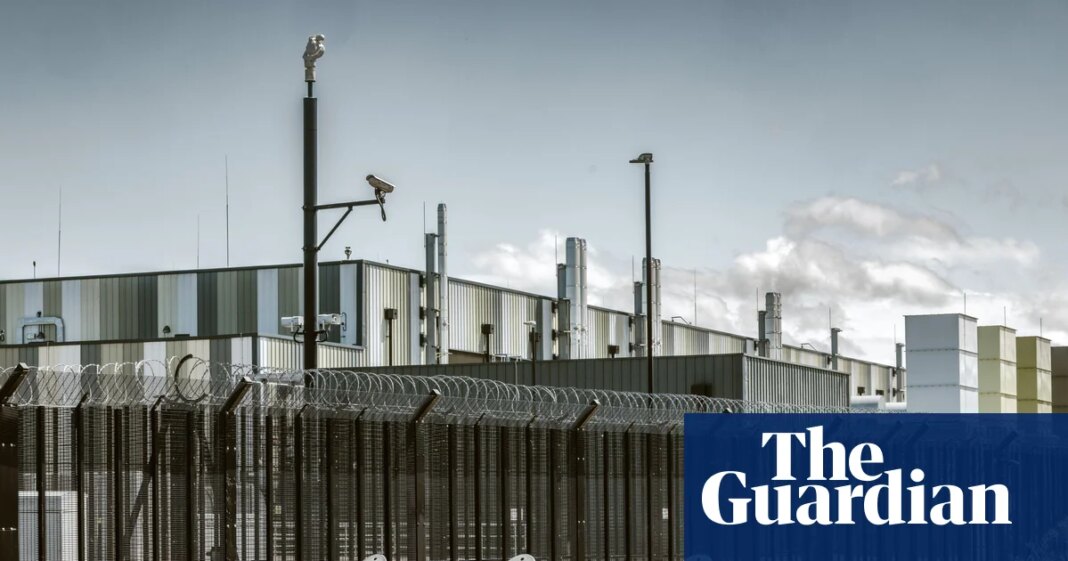
Datacentre planning proposals face all kinds of hurdles, from securing energy supply to high construction costs. But the 2,000 acre Prince William Digital Gateway site in the US state of Virginia had another problem: its proximity to a Civil War battlefield.
“If the development is allowed to proceed, the solemn nature of this historic site would become marred by sitting in the shadow of the monstrous datacentres, along with their associated electrical infrastructure,” said one legal brief against the plans.
The Gateway project is now in doubt after a local court ruling halted the project and a key backer pulled out.
It is one of hundreds of large-scale datacentre projects around the world that are in various states of development, from chancier attempts at riding the AI boom to the more committed projects that have the support of tech behemoths like Microsoft.
But while models produced by cutting-edge AI companies like OpenAI, Anthropic and Google are improving rapidly, the central nervous systems behind their technology – datacentres – are being built at a much slower pace.
The Uptime Institute, which inspects and rates datacentres, has identified 250 global datacentre projects exceeding 100MW in energy demand – equivalent to around 300,000 homes – that have been announced between 2021 and 2024.
It said approximately half of those projects will either not happen, or their completion will be delayed. Even if the cancellations and delays came to fruition, there will still be an “unprecedented and rapid” increase in the power required over the next five years, according to Uptime. Mega-projects cancelled last year include Project Range in the US state of Arizona and the Cyberjaya campus in Malaysia. The Prince William Gateway is also on the cancelled list.
This backlog poses problems for AI firms that need datacentres to train and operate their models. Google has admitted its cloud business – which uses datacentres to provide AI services like chatbots to companies and users – is “compute-constrained”, as demand for ever more powerful AI models and services increases.
Jay Dietrich, a research director at Uptime, says a number of factors are working against proposed datacentre projects. Those include: proposals from developers without datacentre experience and don’t have committed tenants; the size, scale, and energy and water consumption of individual projects and the concentration of these projects in “datacentre corridors” where projects are concentrated; and supply chain issues, including getting the chips to go in them.
“The global supply chain just cannot support the level of projects out there, on the timeline that is projected. The scale is such that it’s going to slow things down,” he says.
And, as the Prince William legal brief shows, the perennial issue of opposition from local community and environmental groups is another to consider.
Uptime says we are entering an era of mega-gigawatt datacentres. It identified six projects last year, each aiming for at least 5GW of power – five in the US and one in the United Arab Emirates. To put that in perspective, Ireland’s peak energy demand is 6GW.
The energy demands are vast. Taking planned projects announced last year alone, and assuming they run at 25% of planned power capacity, they would consume 1.3% of the world’s projected electricity usage for 2025, according to Uptime. It’s a near-doubling of current datacentre demand. About 80% of the new power demand is coming from US projects.
Uptime is not optimistic about these power needs being met.
“Surging datacentre power demands, particularly in N[orth] America, cannot be supported by power grids already operating under heavy strain,” said Uptime in a January report.
after newsletter promotion
In California, datacentres are standing empty for years because the local grid cannot supply them with power. In Amsterdam, an Australian datacentre developer recently sued the Dutch grid after its request for a connection was turned down – an eerie development that signals the potential for growing conflict between datacentre projects and the houses, hospitals and businesses that also need that electricity.
In a heating world with mounting geopolitical instability, the choices involved in building massive AI datacentres – as opposed to directing those resources elsewhere – will become even more stark.
In the UK, the Guardian’s investigations have shown that the government’s sweeping ambitions to make Britain an AI superpower appear to be underpinned by minimal attention to what tradeoffs – and resources – that might require. In announcing a series of multi-billion-dollar projects to mainline AI “into the veins” of Great Britain, the government did not even bother to audit the promised sums.
In choosing sites for the UK’s largest AI developments, it appeared to pay little heed as to whether or not they had electricity.
Some observers are more upbeat. JLL, a US property consultancy, expects that around 1,200 datacentres will be built globally between now and 2030 – with demand overwhelmingly driven by AI.
Andrew Batson, global head of datacentre research for JLL, says he is confident the capacity will be built, adding that lease signings and groundbreakings for the first half of 2026 are slightly ahead of his estimates. Citing factors such as improvements in battery storage and onsite power generation – ie not leaning so much on the local grid – he says energy constraints can be overcome too.
“I am confident that the industry will work through the energy challenges,” he says. “Energy constraints will not go away, but the industry has been developing and implementing solutions for a number of years and that legacy of innovation will continue.”
According to an Uptime report published in January, the seven largest planned datacentres in the world are proposing a combined 45GW of onsite power, with gas as the primary energy source. The UK’s peak energy demand is 45GW.
The Prince William Gateway submission goes on to acknowledge that datacentres are a “fundamental part of the technology infrastructure that supports the modern economy.” But local resistance and universal problems, like energy provision, are hampering this global revolution.