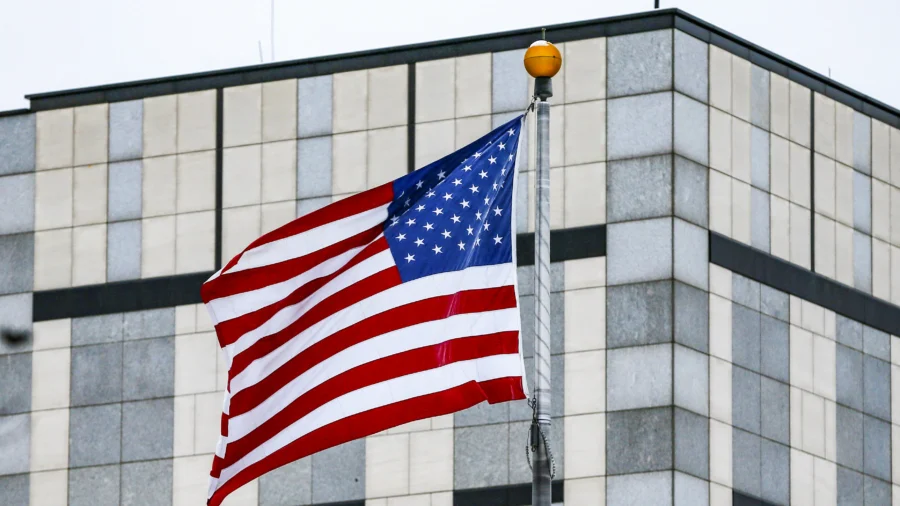
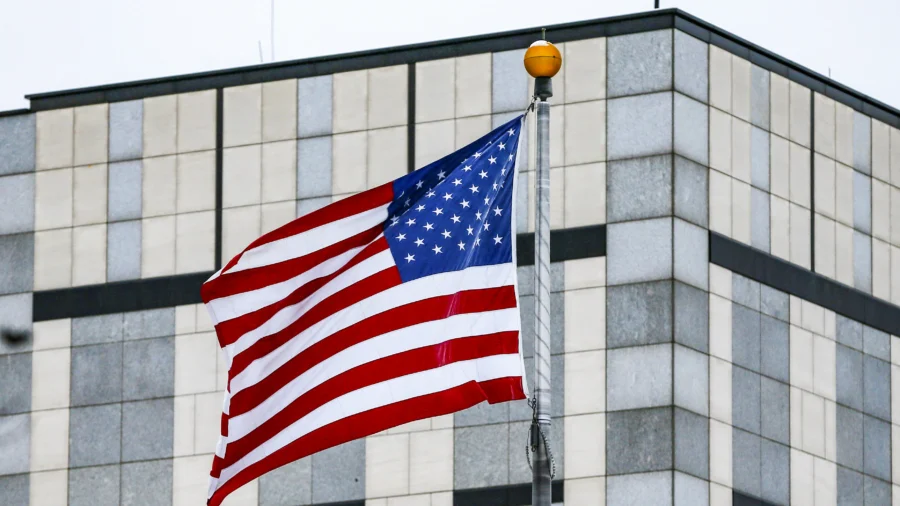
The U.S. Department of State on Tuesday night renewed its warning that American citizens should be prepared for hostilities in the Middle East, namely Saudi Arabia, as the U.S. war with Iran has continued.
“Americans currently in the Middle East should exercise heightened vigilance due to the increased threat of armed attacks by Iranian-supported Houthis and Iranian efforts to target U.S. government officials in the region,” said the U.S. Embassy in Riyadh, the capital of Saudi Arabia, in a Nov. 10 statement.
It added that the Houthi terrorist group, a Yemen-based organization backed by Iran, has continued to attack Saudi Arabian infrastructure and airports. U.S. citizens are also warned to be aware of airspace closures, flight cancelations, and travel disruptions in the country.
“These hostilities have the potential to escalate rapidly beyond that immediate area,” the embassy said, adding that Americans should “take extreme caution” if they choose to fly to or from Saudi airports.
In the meantime, the Department of State has maintained a worldwide caution alert, which was issued in July, about the Iran conflict and noted that an escalation in fighting is possible. The United States and Israel launched their initial round of strikes against Iran in late February, and tensions have remained high ever since.
Americans who are outside of the Middle East should reconsider traveling to any country in the region, according to the July advisory, which said U.S. facilities have been targeted inside and outside the region.
The State Department ordered non-emergency U.S. government employees and their families to leave Saudi Arabia as of Oct. 23.
Bahrain, Israel, Jordan, Kuwait, Oman, Qatar, Saudi Arabia, and the United Arab Emirates were under a Level 3 advisory, which urges U.S. citizens to reconsider traveling to those nations.
The alert for Saudi Arabia was issued after U.S. President Donald Trump and other administration officials signaled that the U.S. military will hold off on launching major strikes against Iran in the wake of significant Republican losses in the Nov. 3 midterm elections that will shift control of Congress to the Democrats in January.
In comments to reporters on Nov. 9, Trump said the conflict with Iran “militarily is effectively over” and that he isn’t prepared to resume major strikes. He delivered the remarks after he met with Qatar’s prime minister, Sheikh Mohammed bin Abdulrahman bin Jassim Al Thani, earlier that day.
“Iran militarily is effectively over,” the president said. “We’re just keeping it the status quo.”
Trump said that Iran’s regime has been “decapitated” but said he is still going to make sure that Iran’s controversial nuclear program is not weaponized. Since the start of the war, Trump has maintained that Iran cannot be allowed to procure a nuclear weapon.
“They’re talking to us, and they’re talking very politely. And we’ll see what happens,” Trump said, referring to Tehran.
“The military action doesn’t seem to be a very necessary thing, but we’re locked and loaded, ready to go for any reason that changes.”
Trump said that a U.S. military blockade of Iranian ports that went into effect earlier this year is still in effect, describing the action as “the greatest military blockade ever” in his Nov. 8 comments.
The Associated Press contributed to this report.