We independently evaluate all recommended products and services. Any products or services put forward appear in no particular order. if you click on links we provide, we may receive compensation.
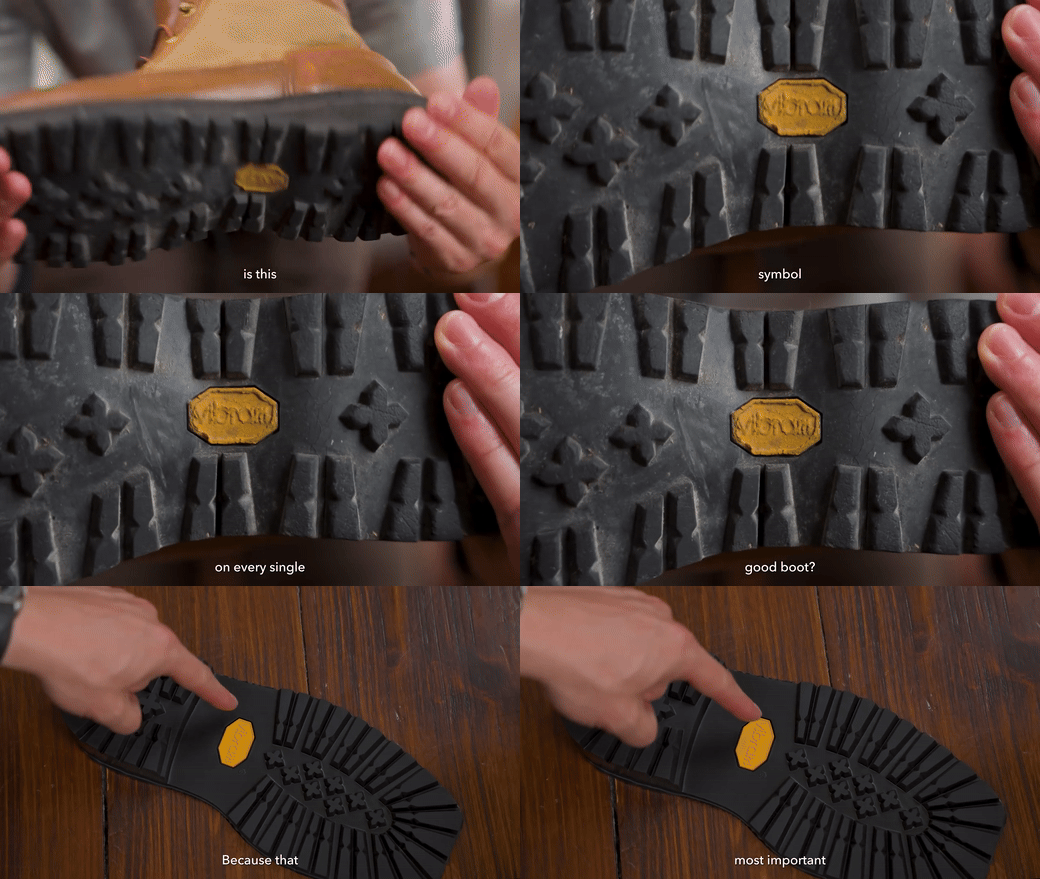
Riddle me this, why is this little yellow symbol on every single good boot?
Because that otwear history. The original version of this design is what conquered K2 for the first time. Jim Whittaker, the first American to summit Mount Everest, wearing this sole.
Suddenly, the elite mountain climbers at the time were flying up mountains because they had some rocket fuel under their feet. Invented by one of the greatest climbers to ever climb.
Vitale Bramani, aka Mr. Vibram. That’s just a combination of his name.
Mr. Vibram saw something at the time that no one else saw. With rubber, we shouldn’t be trying to copy the bottoms of old leather dress shoes, we should be trying to copy tanks.
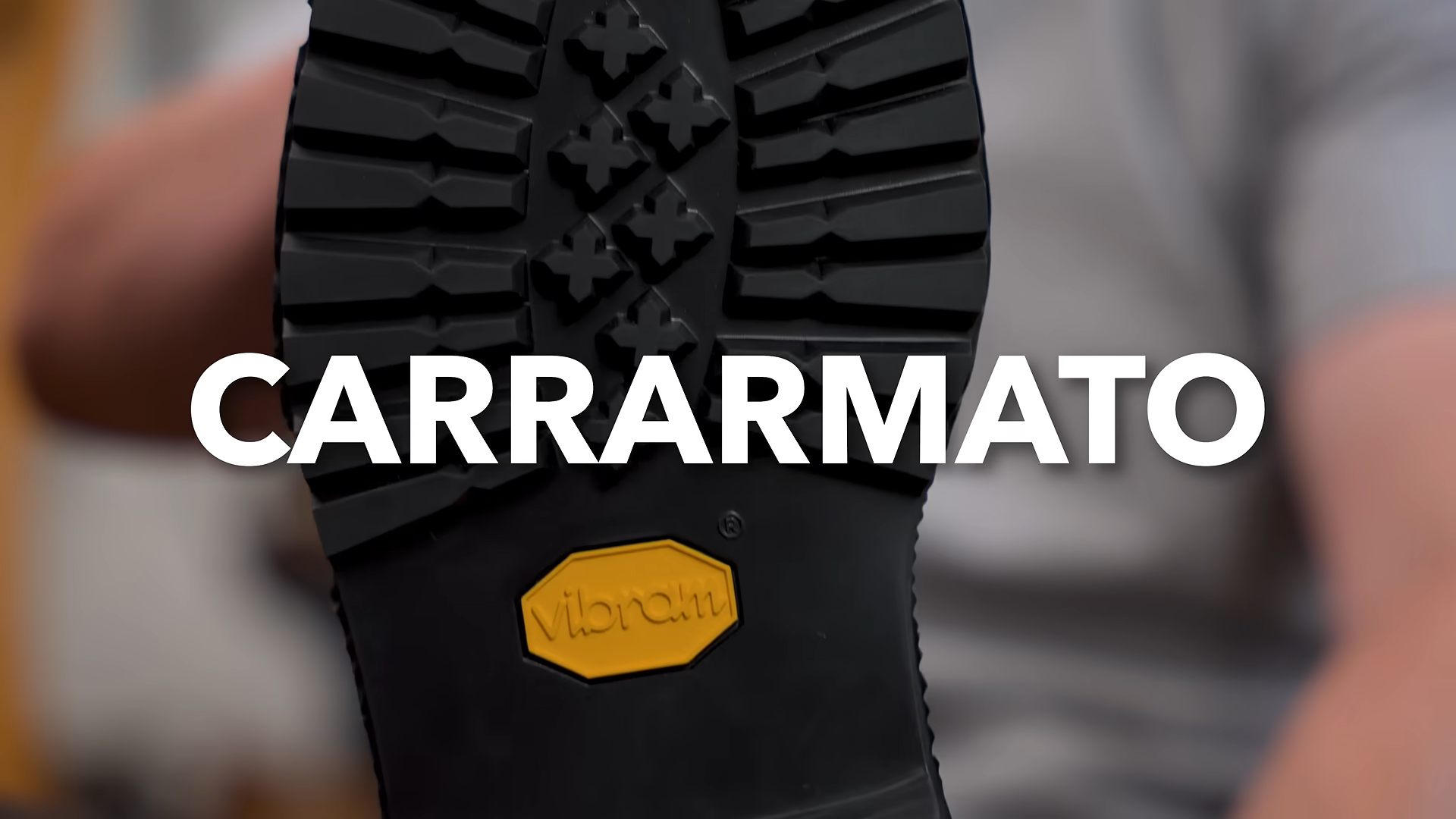
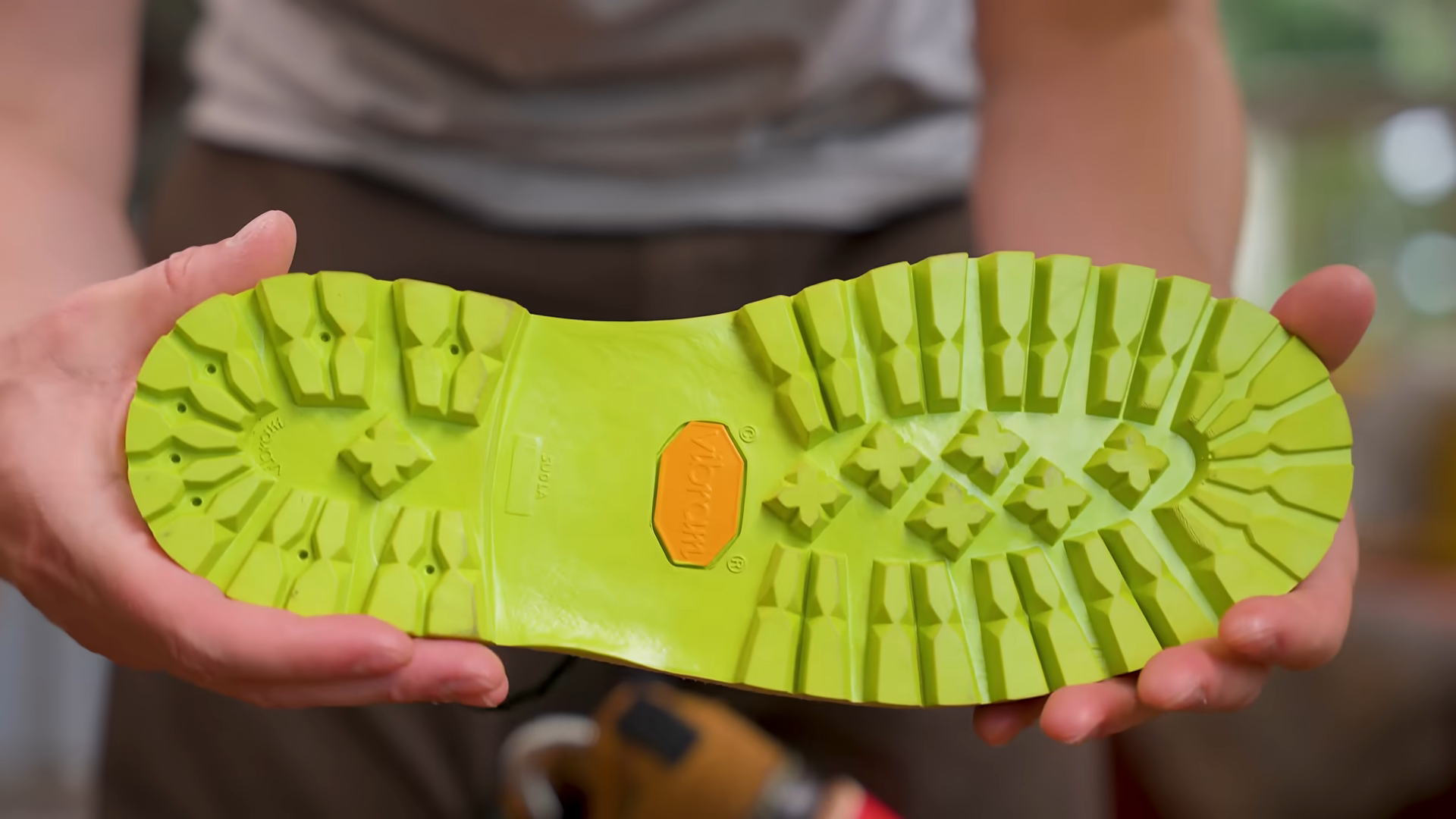
And that is exactly what this is, the Carrarmato, Italian for tank.
The Carrarmato exists, though, because of what happens when I do this. I take these, run them under water, and then to simulate what actually happened, I’ll take these and I’ll put them in our freezer.
What I just simulated is thought to have killed six of Vitale Bramani’s climbing companions on a climb that he was actually on. That was part of the recipe that led to their death.
And, of course, their deaths brought the Carrarmato to life.
But, not for nothing, that was 90 years ago. There weren’t giant $70 billion footwear brands 90 years ago. They are way bigger than Vibram.
So, my question was, why is Vibram still relevant? Especially because they’re still making the exact same outsole.
Well, it did update in design a little bit, but pretty similar.
I really wanted to find out, especially because Vibram is more of an engineering company than anything else. So, I just emailed them and said, “Can I come over?” And they said, “Ask your mom.” And I—my mom said yes.

And on top of that, they let me come in, try everything out, annoy their lead designers, and say, “Why do these lines spin around the boot? Why are they flat? What is this star doing in the center?”
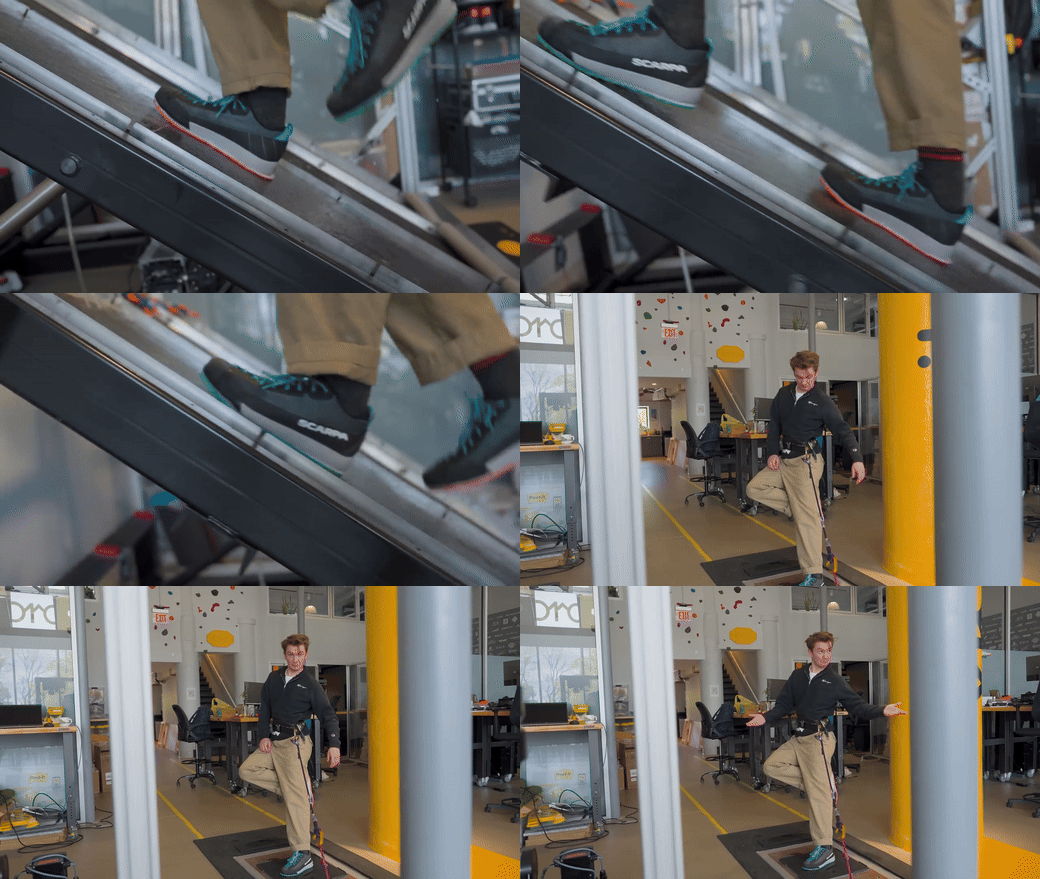
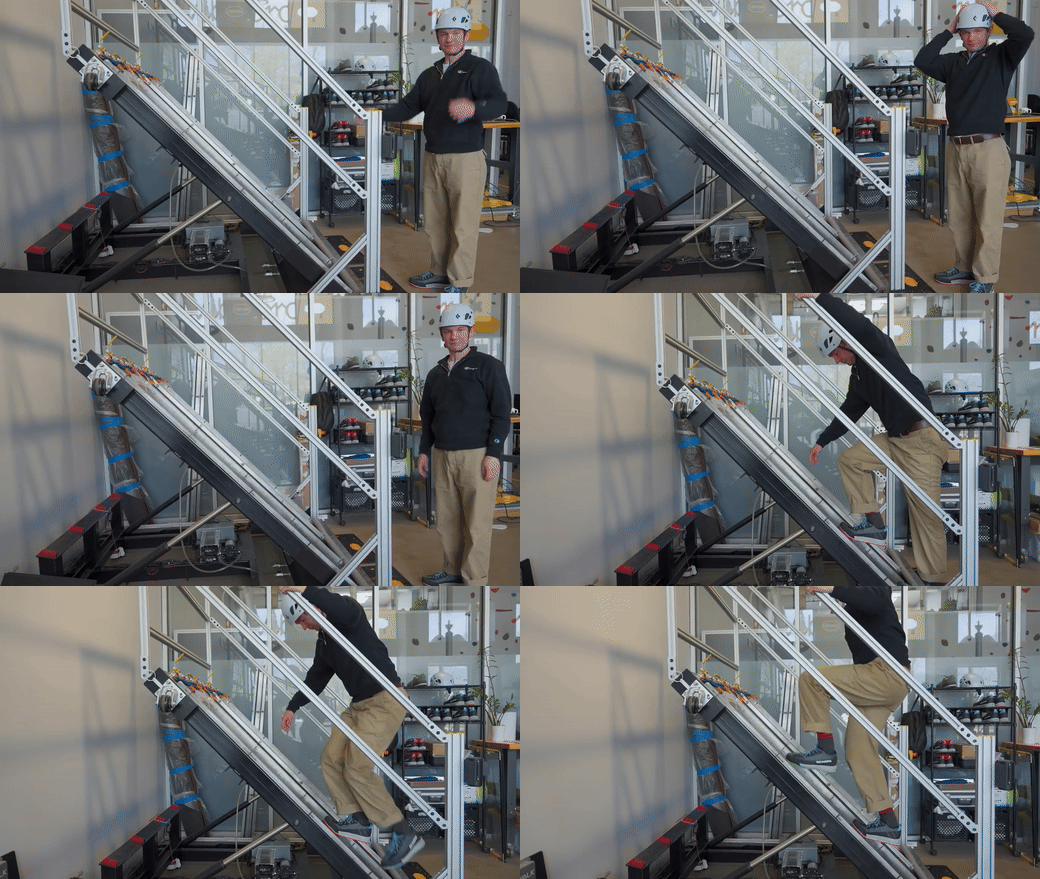
In the wintertime, I used your soles to sprint across ice. Now I’m going up this very steep concrete thing with water coming down it. How are you doing that? How exactly are you doing that?
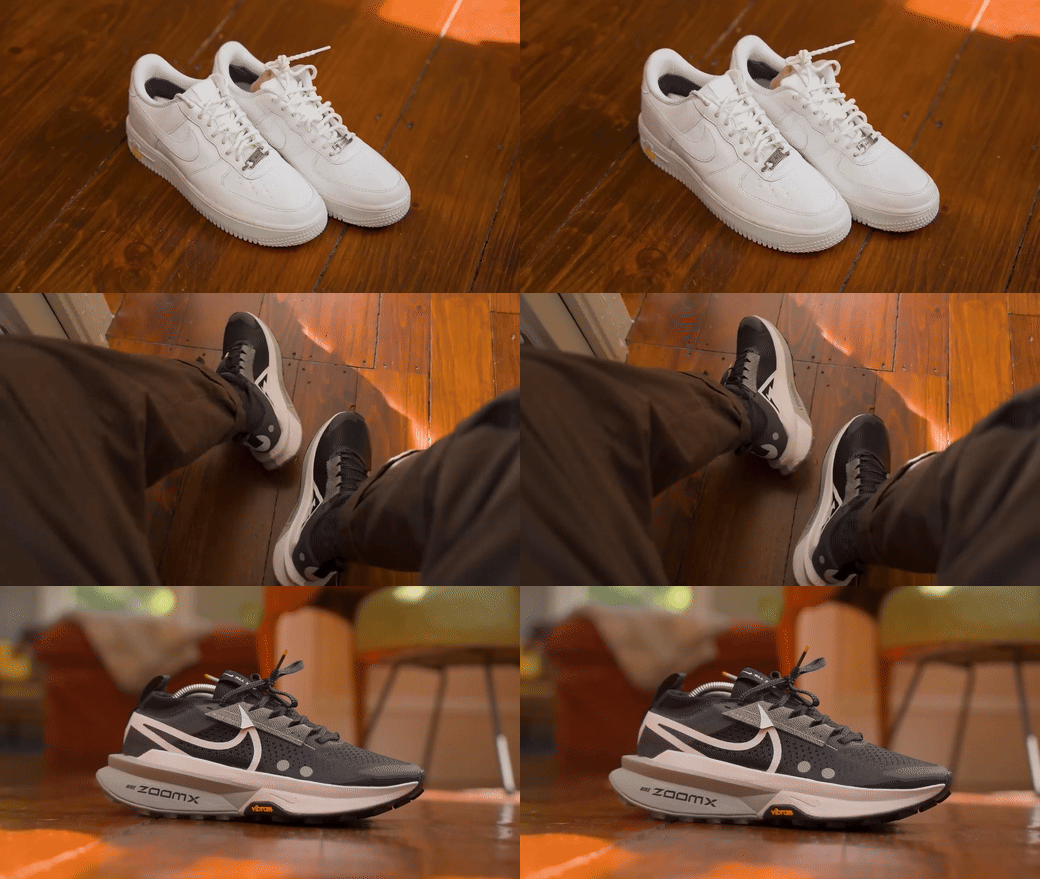
And yes, I did ask the big question. Nike is a $70 billion company. There are other giant companies. Why do they all still come to Italy, to you guys, when they want the absolute best?
So, today’s agenda is to go over three things: traction, grip, and what $70 billion still can’t buy.
Grip vs. Traction
The two most important words in this article are grip and traction. Vibram—and Vibram is the master at both.
But in the 1930s, when Vibram was climbing, that was not the case.
You had these. This was your grip.
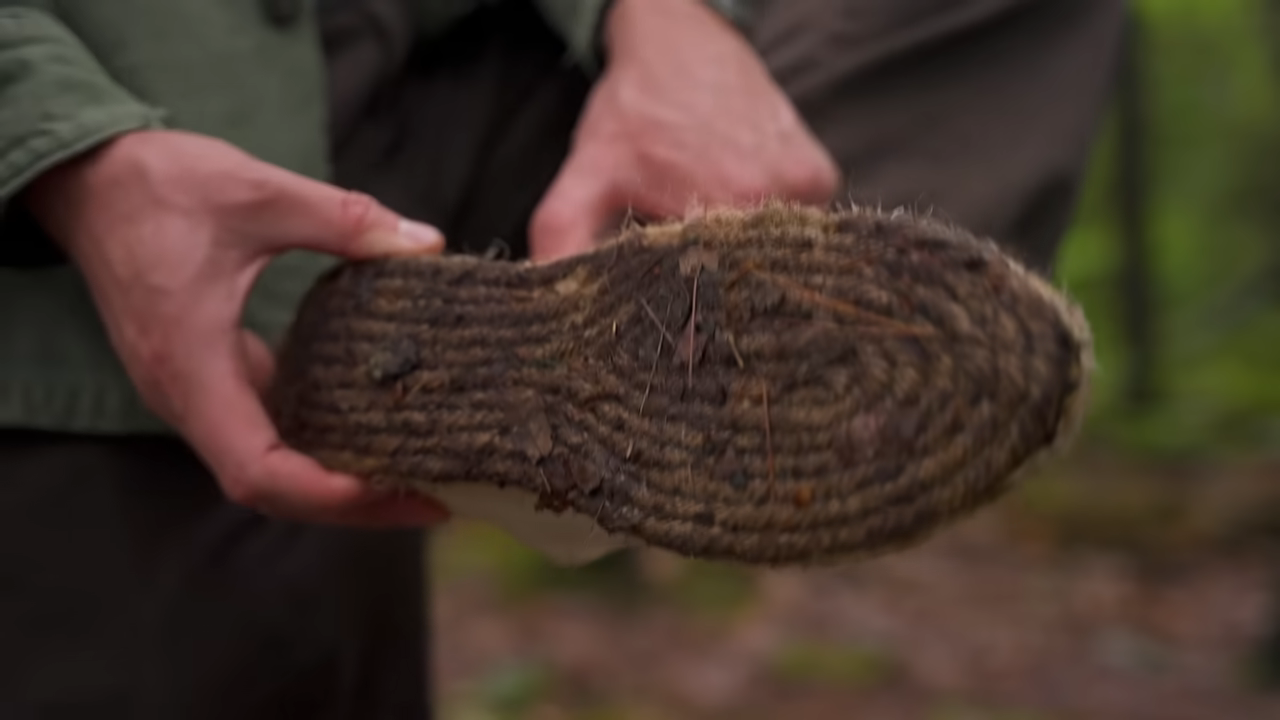
You probably recognize these. If I do this, do those look more familiar? They’re espadrilles.
What’s very important about them is their sole. This is a wrapped rope sole made from jute.
Climbing footwear in the 1930s did not look like this, but it did use this sole. So, that’s why I got it.
Luckily, these don’t fit me, so they look terrible.
Get in there, you little bugger.
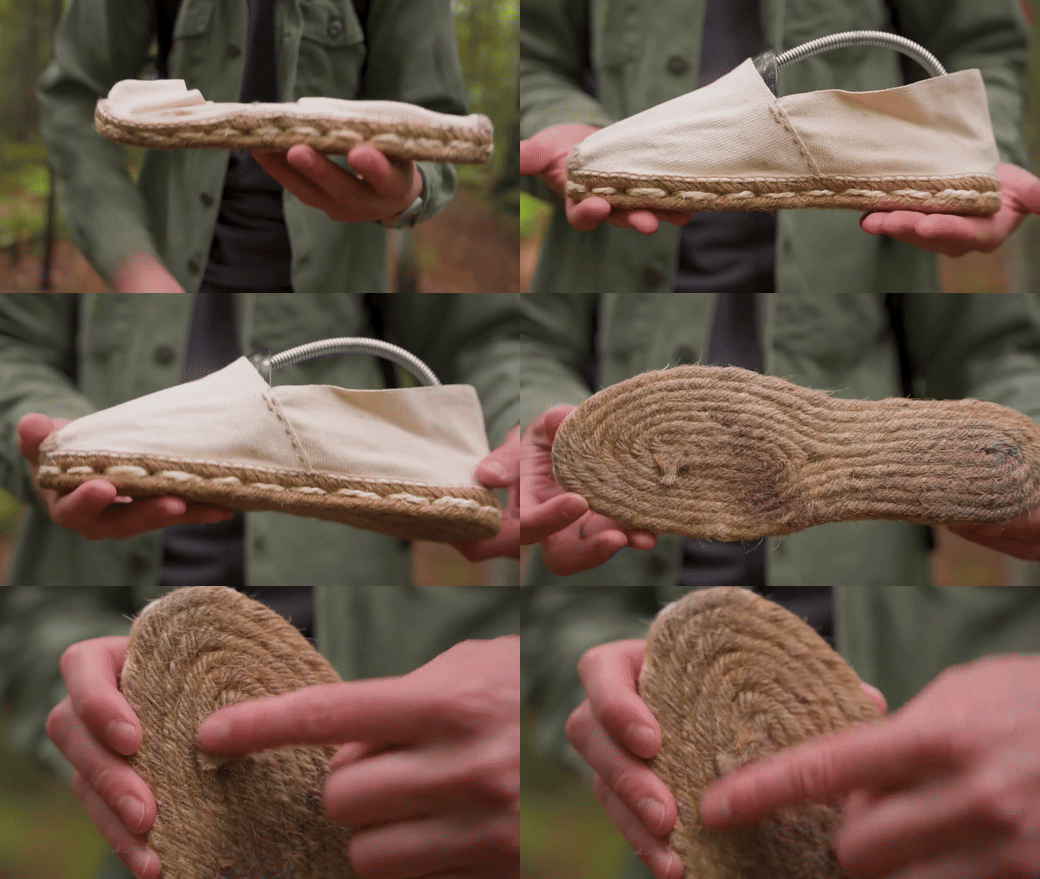
At the time, in the 1930s, rope soles were really good when you were going up smooth and dry rocks, because they can get into all the little nooks and crannies on the rock. The flexibility of the soles, combined with the kind of soft, bouncy aspect of the rope and everything, allowed climbers to get a lot of grip, or some grip.
Before visiting Vibram, I was grouping grip and traction into one thing.
You can’t do that.
When you think of grip, think of—to be the easiest way—think of sticky rubber on a very flat, smooth surface. That is friction, that is locked down, and you’re gripping onto the ground.
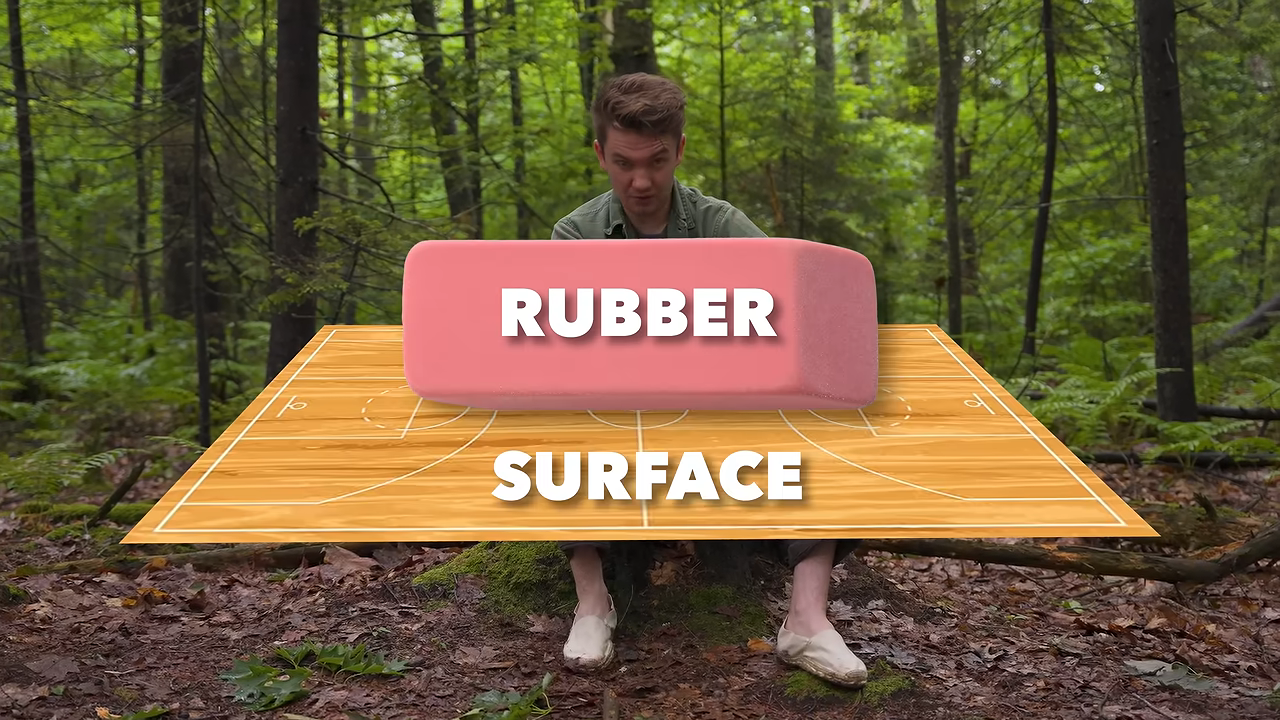
That is where these rope soles came in handy on a climb, but they suck for anything else.
Okay, now pretend I’m a boot.
When we’re talking about traction, we’re talking about actually biting into the ground. And these are the teeth that we’re biting into the ground around this time period.
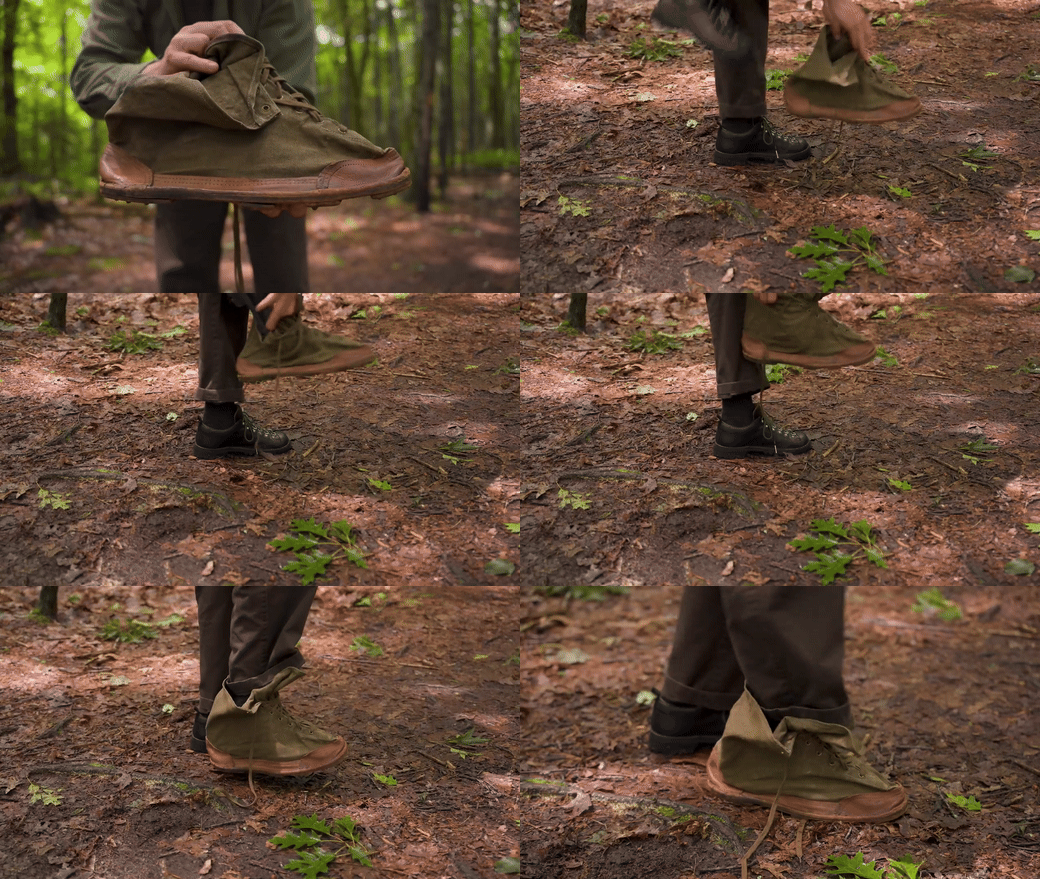
Technically, these should be hobnail boots, which I think I have a shot from Limmer of, but these are 1940s French overboots.
This is probably not what most mountain climbers were doing, but maybe some people kept them.
You’d put these on, and those iron spikes bite into the ground, so you’re locked in. That is traction.
The Climb That Changed Everything
Vibram was an elite-level climber. Like I said, probably one of the best in the world.
He was the personal tour guide for King—King Albert I of Belgium when he was climbing the Dolomites.
That just, like, shot into my brain like I was possessed by King Albert I of Belgium.
Nice to meet you.
Woah. Sorry. Did I do that thing where I get possessed by King Albert I of Belgium again?
Long story short, Bramani is an elite-level climber and he belongs to a group of fellow elite-level climbers called—I had my friend Domi read it for me because she’s Italian. She lives in Brescia. But I’m just going to call it SEM.
The people in SEM, also elite climbers.
But recently, Bramani climbed a mountain called Punta Rasica and he was about to do it again, and 18 other people from SAM were like, “I would also love to do that. Also, the weather is really nice. So, let’s just pack really light. We can go up and down super quick. We’ll only bring our rope-soled shoes and we’ll leave our ice axes behind and a lot of our packs behind.”
In short, of course, the weather changed very fast.
All of a sudden, they were almost at the top and a huge problem. It was freezing cold. The rope-soled shoes were ineffective.
A lot of climbers took off their rope-soled shoes and tried to descend just in their wool socks because they thought they had a better chance, but six people ended up dying.
Not just because of the footwear. It was a system-wide failure. Too many people moving too slow with bad footwear, and speed was the main thing here.
But Bramani looked at footwear and said, “There’s a lot of stuff I can fix here. Namely, traction and grip should not be separate things.”
So, the question becomes, “Sure. Okay, traction makes sense, but this is specifically engineered for a maximum amount of traction. So, why? How does it work?”
And the answer to that is actually best shown through a Nike Air Force 1 because Nike said, “Vibram, would you mind helping us fix something?”
How Outsole Traction Actually Works
First thing you need to do when designing an outsole is decide what is that outsole for.
This outsole is for the basketball court. So, you need a lot of grip.
So, when you flip this little fish over, you expect to see a relatively flat outsole. If my hand is the court, you’re trying to make sure you have as much contact with the ground as possible.
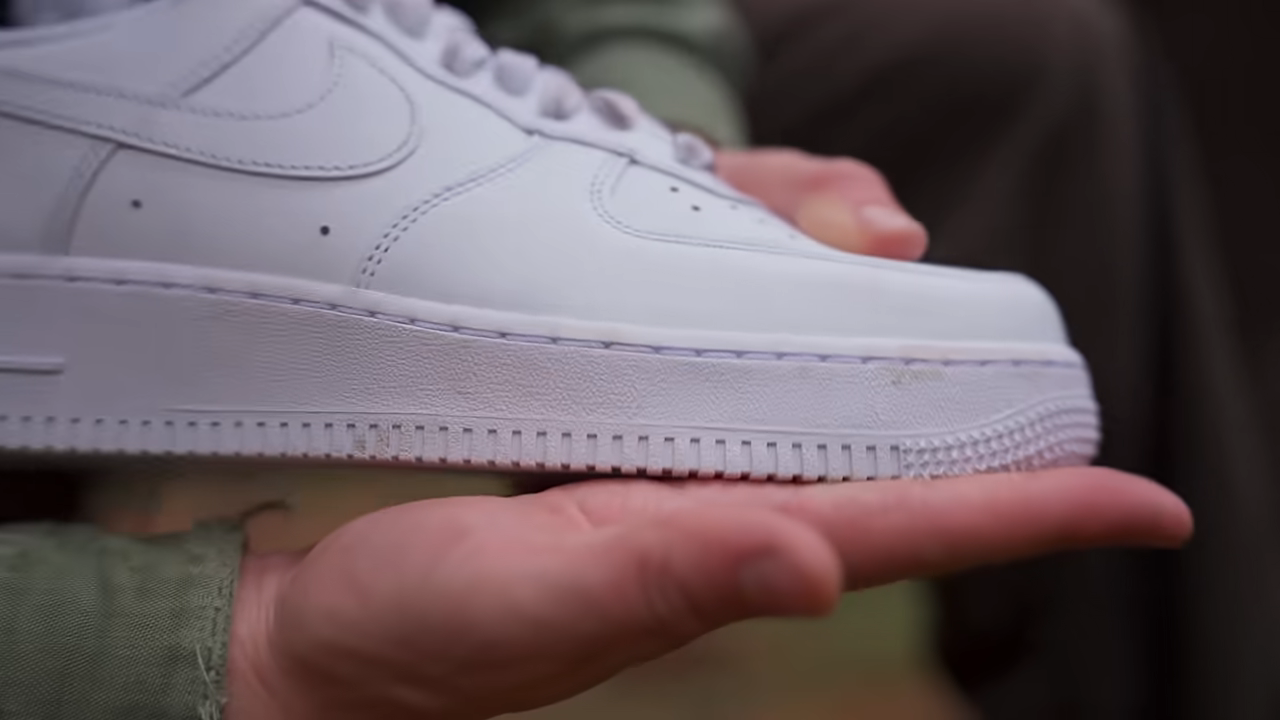
But, of course, the court isn’t perfectly smooth. We do have very nice lacquered wood, but on top of that wood is dust, sweat, little debris, and stuff like that.
So, you need to have some things on the bottom of the sole that are going to displace that dust and sweat and everything on the ground.
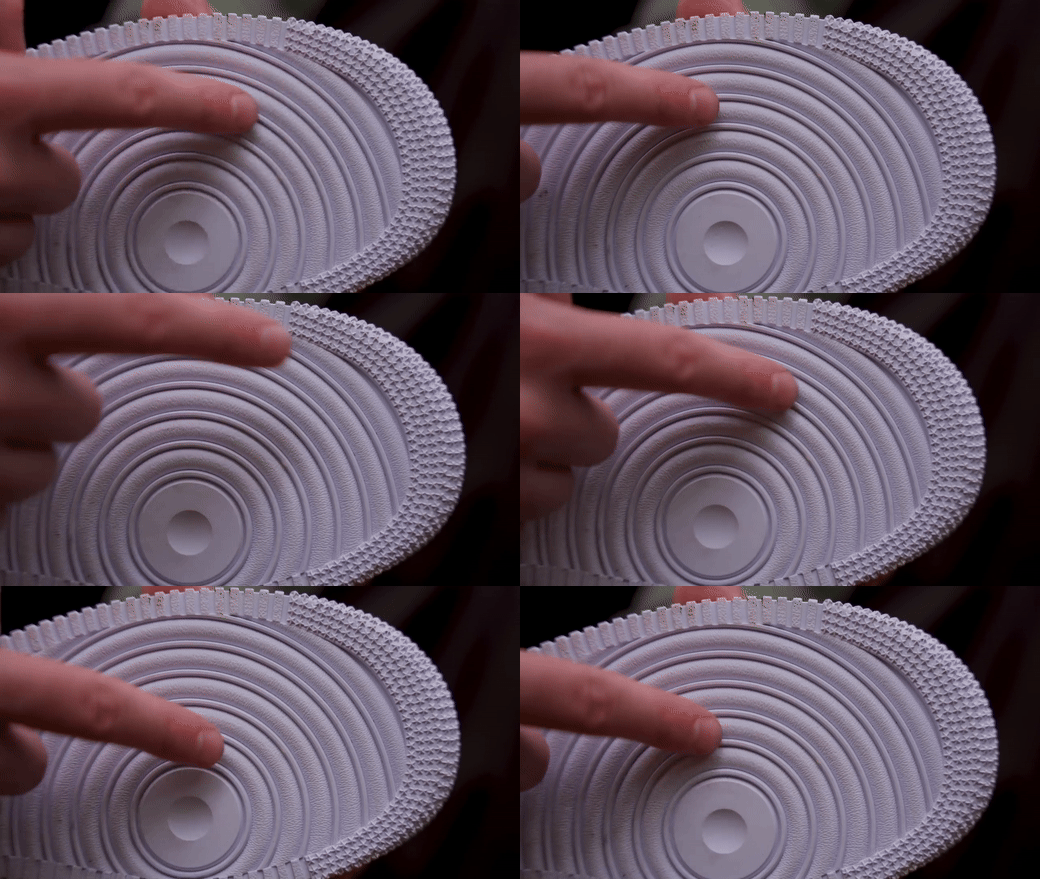
So, these sharp edges and these rolls and everything can actually come in contact with the lacquered wood floor and not just dust.
And then, if you’re a basketball player, you’re doing a whole lot of this. You’re leaning forward, you’re stopping, you’re going backwards, you’re going side to side.
So, we need to make sure the actual shoe is designed like that.
This is my favorite part of the article by the way.
When we have a player going forward, we need these guys, these little edges looking for the ground, to be able to grab on and allow you to go forward.
But, also, since this is circular, we need these guys when you’re going side to side. So, you don’t just slip this way and go forward that way.
So, why is it a circle, you may ask?
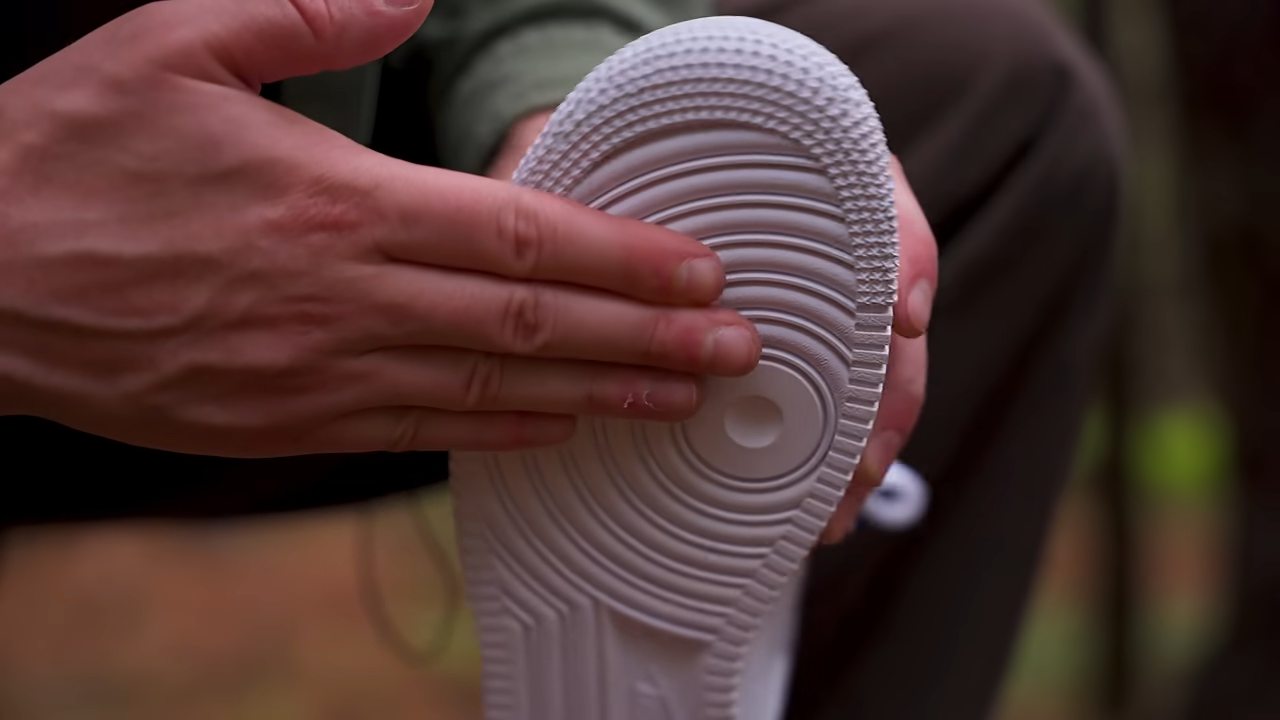
Well, because when you’re playing basketball, the biggest thing that you’re probably doing is pivoting.
When you pivot, those circles allow you to freely move. And look at this, the main pivot points, your heel and your toe, actually have a little pocket taken out.
So, when you’re putting all the weight there, you have as little grip as possible, but you have it everywhere else.
How Vibram Changed the Air Force 1
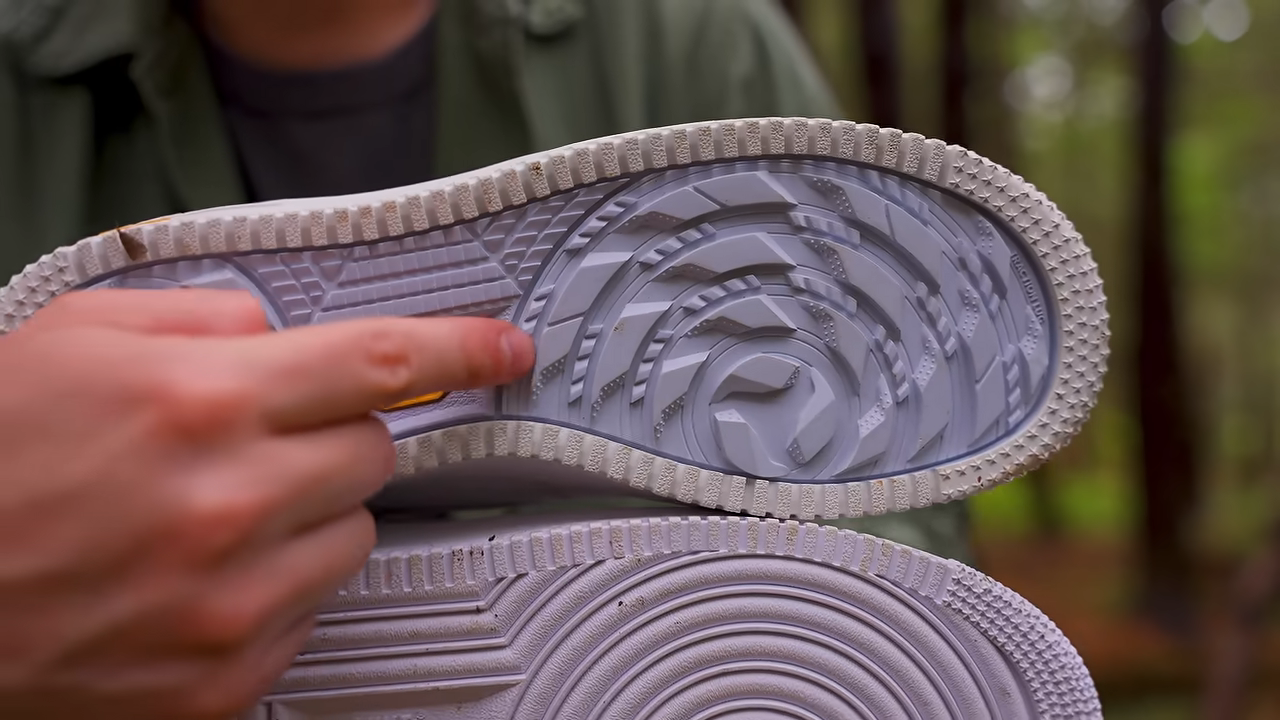
But, these are not really worn on the basketball court anymore. They’re specifically worn around town, outside, stuff like that.
So, Nike brings up Vibram and says, “This is iconic. We need to keep this general language, but we really want to make an Air Force 1 that’s way better on the streets of New York or in your town, whatever.”
So, how do you keep fundamentally the same circular design built to allow basketball players to pivot and stop people going to New York from twisting their ankle because their shoe pivots on them?
The answer is you keep those circles and the design language, but you break them up and add edges all the way around.
So, now if my hand is the ground, instead of rotating smoothly, it gets stuck in all these different places.
This transformation is one of the reasons Vibram is so powerful and brands go to them. Translating this iconic design to pure modern-day performance, very hard to do.
Breaking Down the Carrarmato Sole
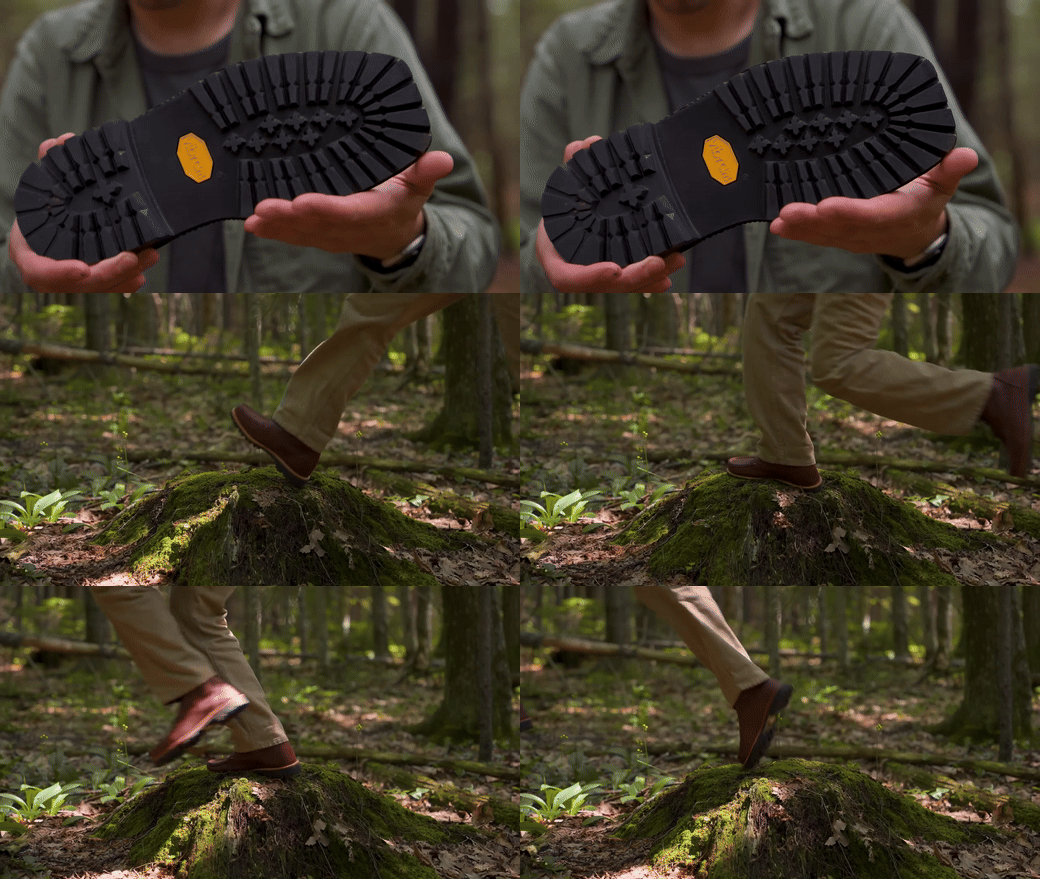
So, if we break down the Carrarmato sole, this is not made for the basketball courts.
This is to give you predictable footing on uneven and unpredictable terrain.
First thing we have is the world’s largest lug, the heel.
If you’re going downhill, obviously this can grip and bite on certain things and make sure you don’t slip.
You’ll notice that these lugs on the sides are very flat and they’re also pitching at an angle all the way around.
When you put down your foot, you’re getting bite from the outside edges in all directions, and they’re very flat and wide as you go to the top because, according to Vibram, that gives you maximum surface area when you’re making contact with the ground.
But, what the heck is going on with these four-sided stars?
That was my biggest question.
The story goes that Vitale Bramani looked up when he was walking through the—and that’s where he saw the shape of the yellow Vibram logo.
But, also the story goes, or at least it’s a bit more internal to Vibram, he looked down and saw these tiles, which, of course, boom, right here. Easy answer.
But, this four-pointed star is actually incredibly important in Italian Gothic architecture.
It’s called a—Domi, going to need you again.
“quatrefoil”
Anyways, very famous shape, has a lot of symbolism to it, especially in the world of religion, but also it represents the four cardinal directions, north, south, east, and west.
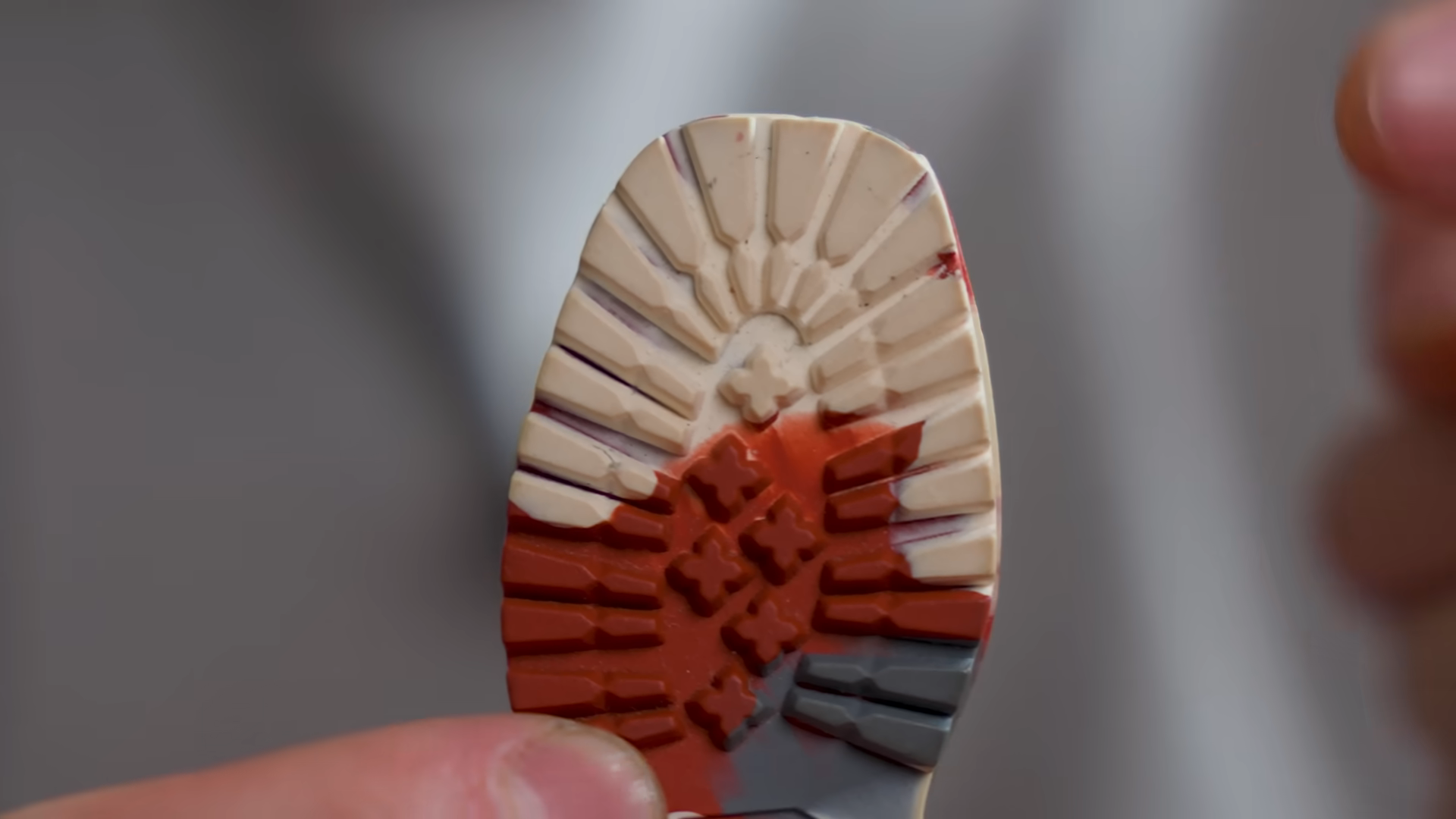
When you’re the first guy adding this much traction to an outsole and you think, “Where do I want people to have a lot of traction?” you think in every major direction, north, south, east, and west.
So, you just put that symbol right here for that reason.
But, it’s—if you think about it for more than 10 seconds now in 2026, you’re like, “Well, what if you did, like, a circle or this weird design with a dip in it? You can make it a lot better.”
And that’s true.
That’s the final question of the article. It’s broken up into three parts.
First, we have to do grip and compounds because we have something called Megagrip and it allows me to go up this.
Vibram Megagrip and Rubber Compounds
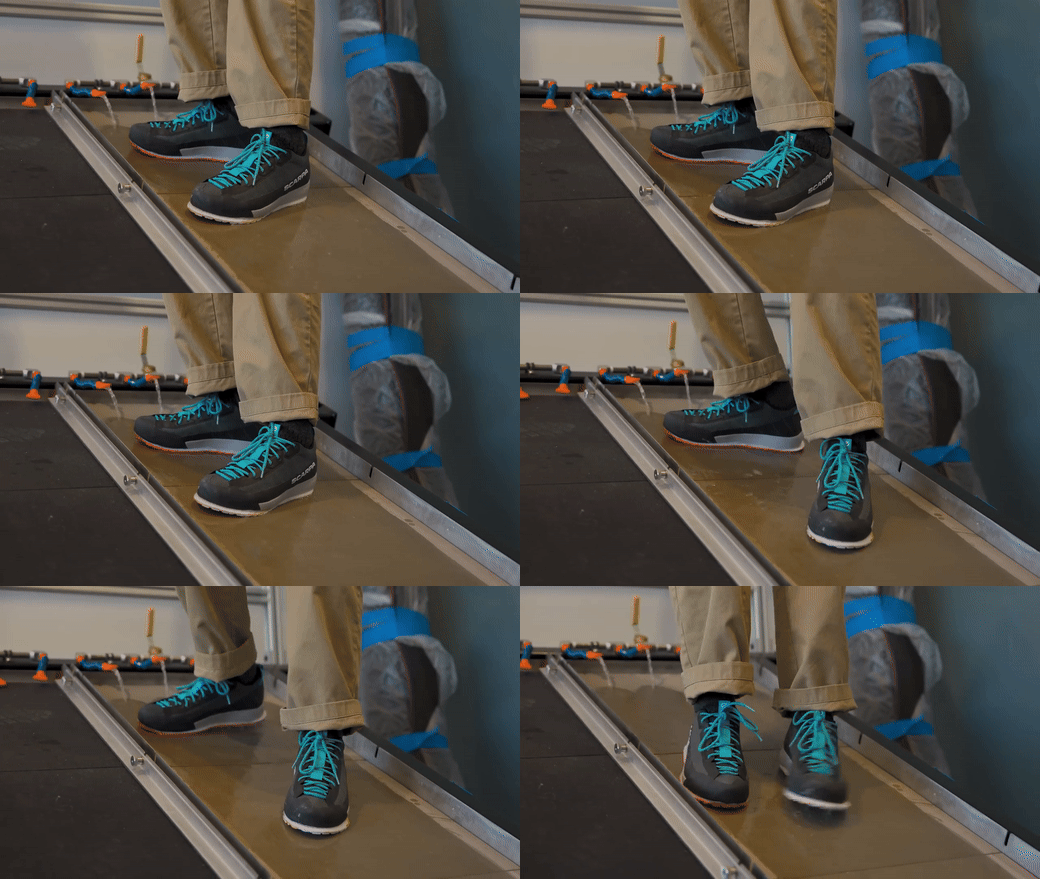
That’s one grip. This is the other.
Traditionally, to get a ton of grip, you want a really soft outsole.
You want, like, when you look at rock climbers, that rubber at the bottom, insanely soft, and it oozes and falls into all the cracks of the rock and gives them really rock-solid grip, but it’s not very durable and it doesn’t—it—yeah, it’s just not durable.
But, of course, you are Vibram and you have a crack team of engineers saying, “Well, it doesn’t need to be totally soft exactly because we can play with one more setting, the actual springiness of the rubber.”
If we have a really springy rubber, as you walk or run, it’s going to go boink, boink, boink, boink.
Obviously, not that much.
The rubber itself is going to be doing that, but if we dampen that so the rubber doesn’t spring back, the energy goes somewhere else and it goes doink, doink, doink, doink, doink.
So, what we could do, instead of making an incredibly soft rubber that’s going to get ripped up, is we can make a harder rubber with less of that doink, doink, doink bounce, and that boink, boink, boink instead is going to give the runner or the wearer more grip.
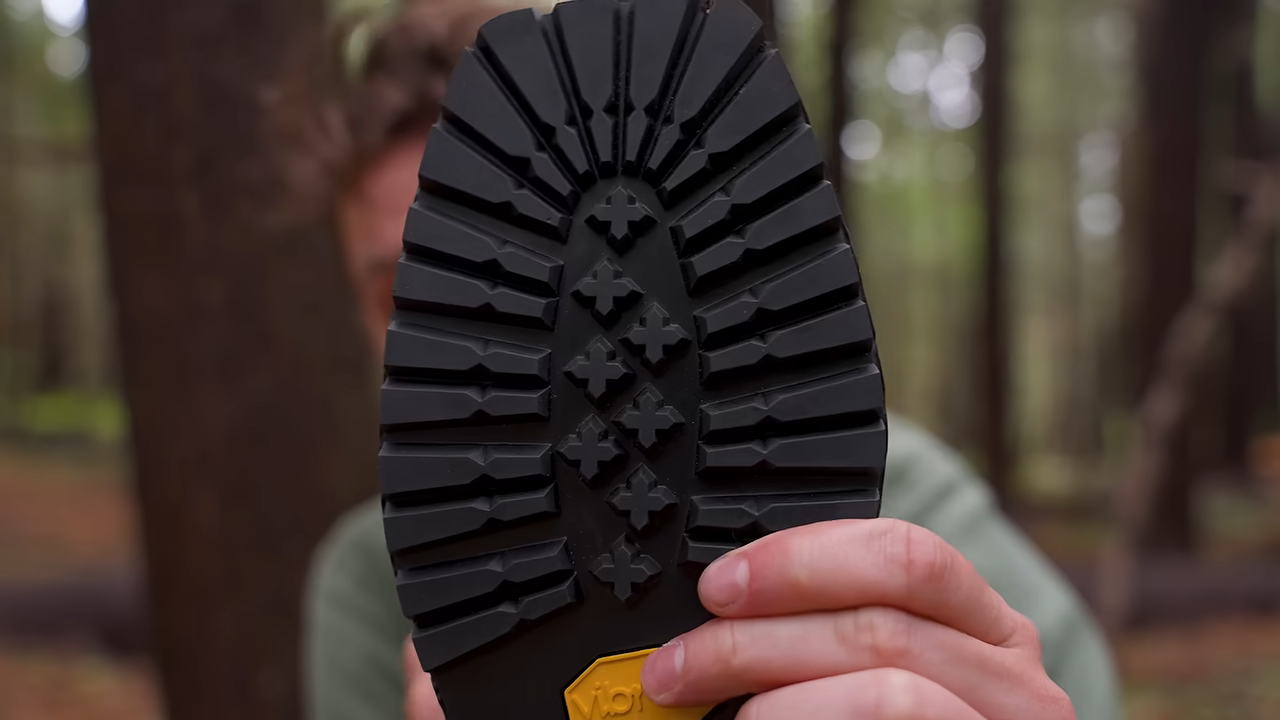
And we’ll make lugs specifically that bite into the ground when you’re running forward, and when you’re descending, we’ll reverse them. So, that way, when you’re slowing down, you also have traction there.
And all of a sudden, people like me can run up a 45-degree angle wet piece of concrete with Megagrip and feel fine and not slip because they’re changing the actual springiness of the rubber and keeping it firm and durable so you can run hundreds of miles with it at the same time.
And that leads us to why Nike doesn’t compete with Vibram, even though technically they could.
Why Nike Doesn’t Compete With Vibram

Last time I checked the market cap of Nike was $67 billion.
So, the natural question I had was, if you’re worth that much money, why not just cut Vibram out and make your own soles and make a ton more money doing that?
And there are a few reasons.
The first reason is just that would be kind of stupid.
The added margin or money that Nike can make by making their own soles is completely dwarfed by the complexity of running a giant company like Vibram.
That is a huge web of people that you can just outsource. You connect with two people at Vibram instead of hiring 10,000 people.
But the other thing that I’m consistently learning over time is that money does not automatically mean success.
You can’t just keep throwing money at something and it’s going to beat everybody. That doesn’t work.
Vibram has a knowledge-base fortress and unless you can scoop up everything that makes Vibram Vibram, which you virtually can’t do, you will never compete with someone like Vibram who is making the best outsoles in basically every sector of the footwear industry for everybody.
If you try to rival Vibram, you are going up against New Balance, La Sportiva, Nike. Every single brand that puts Vibram on the bottom of their footwear is going directly against you, and you’ll never win.
And unless your name is Vibram, the most valuable thing you bring to footwear is probably not the outsole.
It could be the design, it could be your logo, it could be some new woven technology, but probably not this.
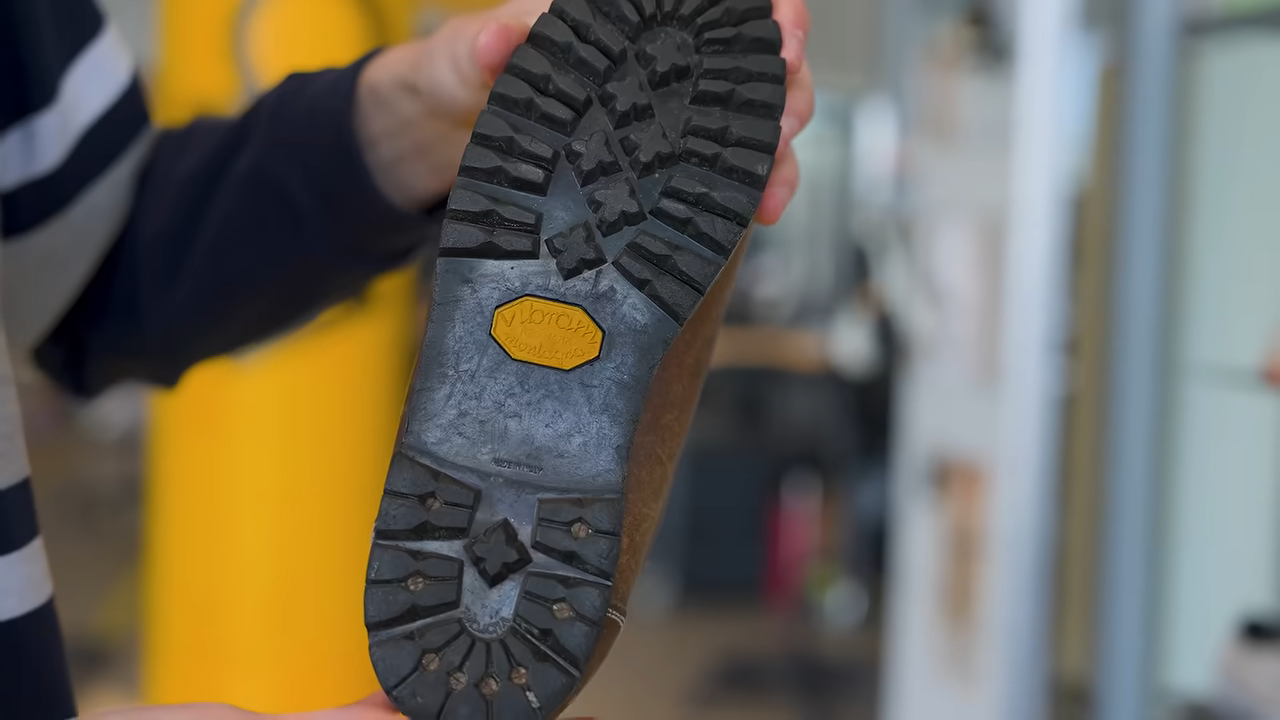
What Vibram Brings to Other Brands
A lot of what they do is work with insanely talented designers at giant brands, but they look a little bit closer and say, “While that design is cool, it’s not as effective as you think. This is what I learned from this brand, this is what I learned from this brand. Let’s figure out a way to actually pull performance out of it.”
And the best example of this that I have and my favorite story from meeting all the people at Vibram is this.
And I’m going to change the story a little bit so this brand doesn’t get mad at me.
But the brand was like, “Hey, Vibram, we want to change something very important, a few things very important, and it’s better. So just do it.”
And Vibram was like, “No. That’s—you do not want to do that. Trust us, you don’t want to do it.”
And the brand was like, “Oh, yes, we do.”
So, instead of arguing with them, Vibram goes to their massive testing facility and they set up a little test and film it for the brand.
And they say, “This is what you want to do.”
And they show a guy going up a similar ramp that I was going up in this shot and immediately upon putting his foot down, he falls forward.

And then they go, “And this is what we’re proposing.”
Same dude, same testing conditions, goes up that ramp without a care in the world and doesn’t slip. Doesn’t even need his hands for guidance.
And Vibram’s just chilling in the corner and they’re like, “So, yeah, let us know if you want us to make that change. We could do it, no problem.”
Oh, baby.
Watch This Review
Why the Original Vibram Sole Still Survives
So, we end here.
Me asking Vibram, isn’t—can’t you make this, like, a billion times better? Why are you still using this?
And essentially, they were like, the original design was so good that it’s extremely capable and able to be used in a ton of different scenarios today.
But, in order to remain the best, we have to break up all of our designs into hyper-specific uses when we can.
So, we’ve destroyed the Carrarmato for pure mountaineering with weight, with grip, with traction, everything.
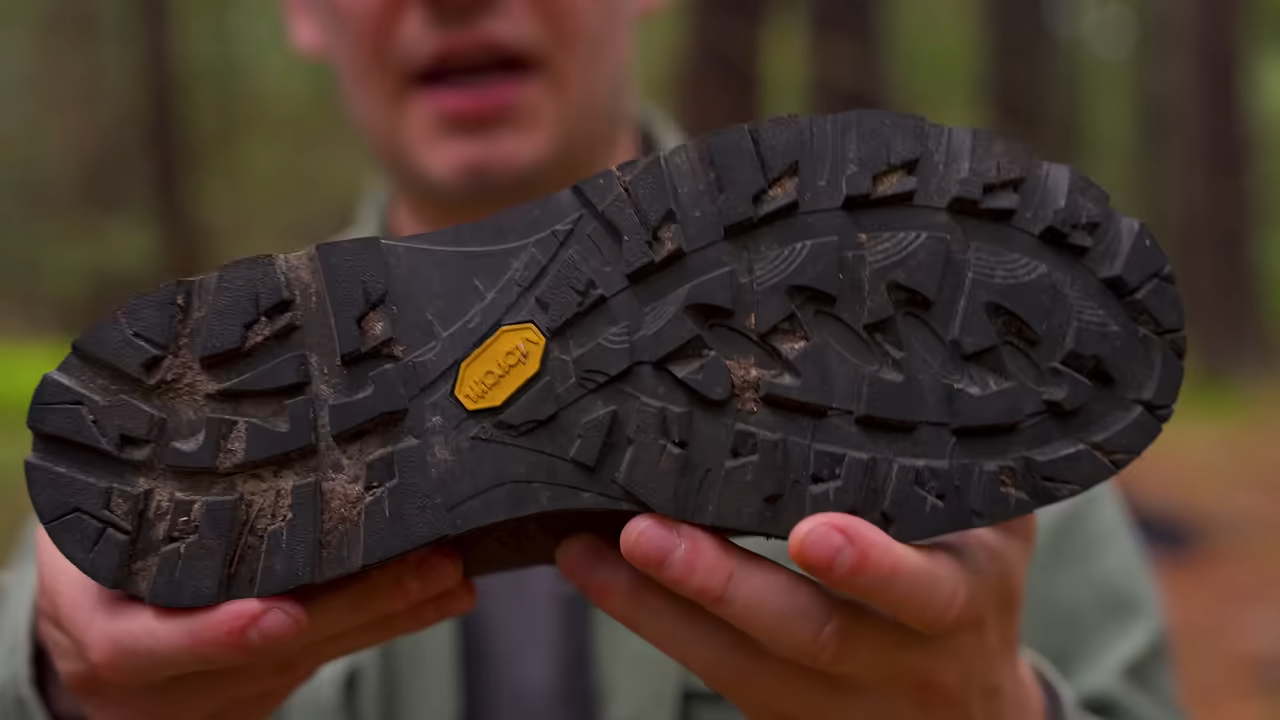
But, this compound, the grip, the structure, the traction is way better for other use cases and is really good for general use cases.
So, it still survives today with minor tweaks as the times go on.
And big brands still call them because they actually weren’t the king of the mountain 90 years ago. They were the king of understanding how a rubber outsole should actually work in different environments.
And by fundamentally seeing outsoles a different way 90 years ago and never straying from that idea and becoming a boot company, there is nobody else in Vibram’s league.
Any brand, no matter how big, that makes this part of the boot or sneaker, is going to lose to these guys.
Okay, anyways, that’s about it. I’ll see you soon.
This article was adapted from Michael Kristy’s video on The Iron Snail, with edits from FashionBeans, and was reviewed by Michael to ensure the integrity of his original content. Watch the full video here.

The Iron Snail is a men’s fashion vlog (and now article series!) starring a young man named Michael and featuring a snail no bigger than a quarter. The two are set on taking over the world of fashion by creating a clothing line to end all clothing lines. Until then, we’re here to tell you EVERYTHING you need to know about the best clothing out there, from the highest quality raw denim jeans to the warmest jackets to the sturdiest boots…the Iron Snail has got you covered.