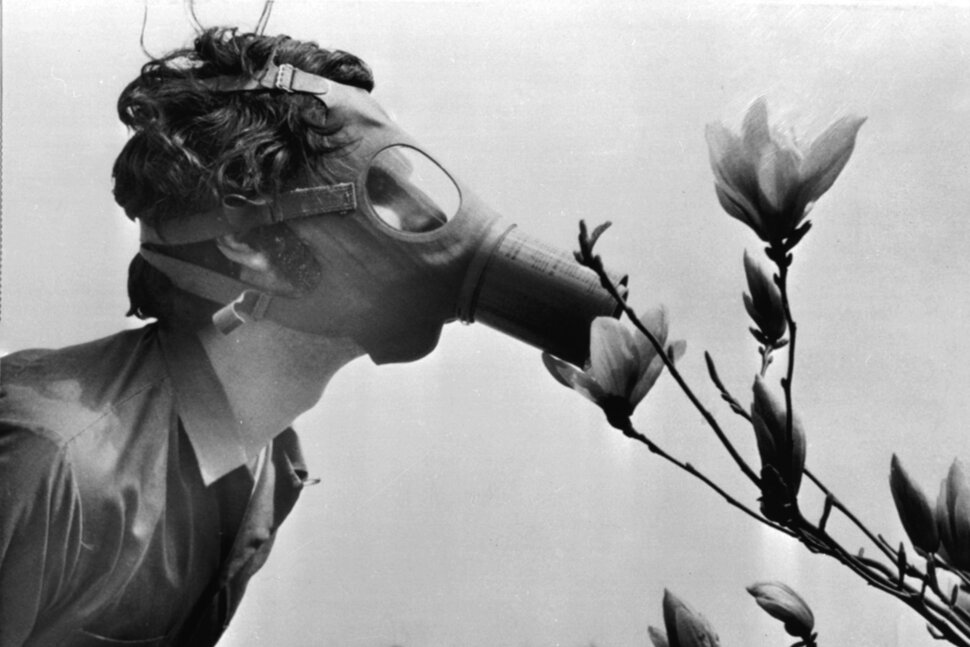
More than 1 billion people around the world are observing Earth Day on Wednesday, participating in a range of events from community cleanups to tree plantings to town hall meetings – all in honor of the global movement to protect the natural environment.
“Earth Day 2026 affirms that environmental progress is real, resilient, and ongoing despite policy uncertainty,” says EarthDay.org – the world’s largest recruiter to the environmental movement – on its website.
Here are some facts about the international celebration and its history.
1. Sen. Gaylord Nelson, a Democrat from Wisconsin, created the first official Earth Day on April 22, 1970. He was inspired by the student anti-Vietnam War “teach-ins” and referred to his own as a “national teach-in on the environment.” About 20 million people participated in the first Earth Day.
The Best Cartoons on Donald Trump

2. Some say the date was chosen so that more students would be able to participate, as it fell between spring break and final exams. Others attribute the date to Arbor Day, a holiday that promotes the planting and caring for trees.
3. The idea was first proposed by a former businessman in the plastic industry, John McConnell, in October 1969 at a UNESCO conference in San Francisco. A lifelong activist, McConnell designed and created the Earth Day flag, which is still used today, and chose the March 21 spring equinox as his Earth Day date.
4. As it happens, many countries mark both days. The United Nations and other countries around the world, including Austria and Germany, continue to ring peace bells on the spring equinox, a practice that began in 1971 when U.N. Secretary-General U Thant rang the U.N.’s peace bell.
5. The first Earth Day led to the creation of the U.S. Environmental Protection Agency later in 1970 and the passage of many laws aimed at cleaning up or protecting the environment, including the Clean Air, Clean Water, Endangered Species, Toxic Substances Control and Surface Mining Control and Reclamation acts.
6. Earth Day is credited with starting the environmental movement in the United States, and it went global in 1990 with 200 million participants in more than 140 countries, according to EarthDay.org. It is now celebrated internationally by more than 192 countries.
7. More than 1 billion people participate in Earth Day events each year, making it the largest civic observance in the world, according to EarthDay.org.
9. The original date for Nelson’s Earth Day was chosen so that it did not coincide with other national or religious holidays. April 22 used to have significance in the Soviet Union, though: It was Vladimir Lenin’s birthday.
10. Earth Day is meant to raise awareness about the environmental challenges faced around the world. The theme for 2026 is “Our Power, Our Planet,” encouraging everyone to do their part in protecting their natural environments, according to EarthDay.org.
– Former U.S. News writer Katelyn Newman contributed to this report