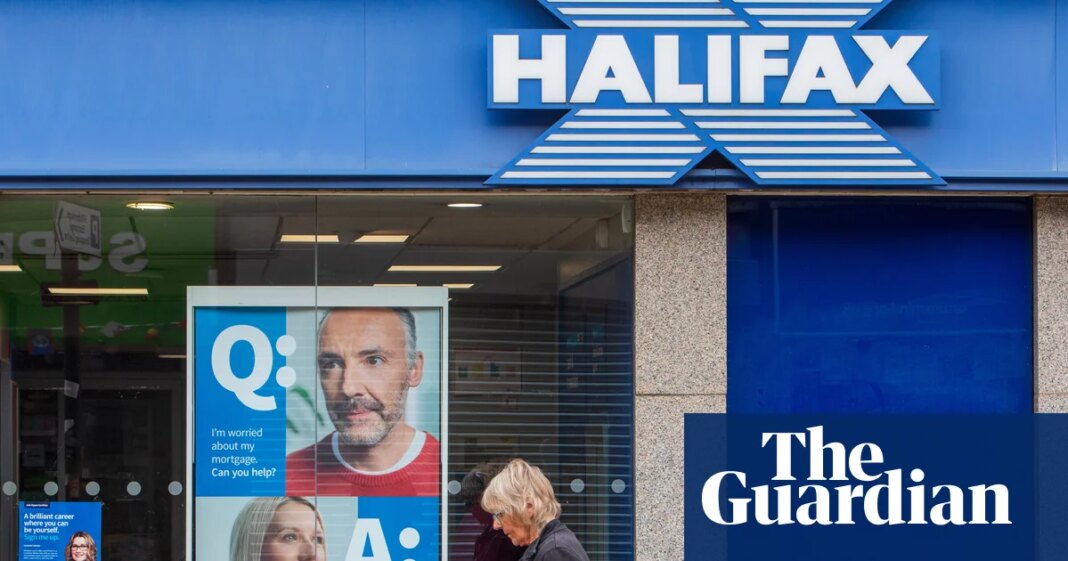
Bosses at Lloyds Banking Group are considering axing the Halifax as a standalone brand, as part of a sweeping review that could result in the historic 174-year-old lender disappearing from Britain’s high streets.
Lloyds has been assessing the future of its branding strategy and whether it will continue to operate everyday banking under three different brands – Lloyds, Halifax and Bank of Scotland – after government-backed rescue efforts at the height of the 2008 financial crisis.
Bank of Scotland is understood to be safe, as the group’s only retail banking brand in Scotland. However, the bank operates under Halifax and Lloyds in England and Wales, leading bosses to consider subsuming Halifax into the group’s Lloyds branding.
The Guardian understands that Lloyds could start phasing out the Halifax brand as early as 1 July. The Sun, which first reported the news, said this would mean customers would no longer be able to open new Halifax accounts through the app or the website, with customers starting to be transferred to the Lloyds brand in the autumn.
A Lloyds Banking Group spokesperson said a decision had not yet been made.
“We regularly look at the role our brands play in supporting our customers,” Lloyds said in a written statement. “Our banking customers can already use any Lloyds, Halifax or Bank of Scotland branch, and see any of their products and services in any of their apps – there are no changes for our customers today.”
It is understood there would be no change to customer account numbers under any potential migration plan.
The branding review comes as the Lloyds Banking Group chief executive, Charlie Nunn, prepares to announce a new strategic plan at the end of July, alongside half-year results. His current five-year plan, which was rolled out in 2022 and will come to a close in December, focused on the bank’s massive shift towards digital and mobile banking.
Last year, Nunn rolled out the policy allowing customers to use any of its Halifax, Bank of Scotland and Lloyds branches, regardless of which lender they held accounts with, prompting concerns about branch closures and job cuts. The bank started rolling out standardised uniforms across all its branches months earlier, with staff also covering shifts between different branded sites.
The banking group revealed plans to shut another 136 branches weeks after the cross-branch policy was announced. Lloyds will operate 610 branches in total across the group, once previously announced closures are completed, including 238 under the Halifax branding.
Axing Halifax would mean getting rid of one of the most recognisable and historic lenders on the UK high street.
Halifax traces its origin to 1852, after the Industrial Revolution drew workers into urban centres, including Halifax. Housing shortages and overcrowding prompted the founding of the Halifax Permanent Benefit Building Society, which allowed members to earn interest on deposits, and borrow funds to buy or build their own home.
It financed housing schemes across West Yorkshire, and eventually grew into a UK-wide institution that, by 1928, was the largest building society of its kind in the world. The Halifax would end up being a key player in national housebuilding schemes after the first and second world wars.
Decades later, new legislation, brought in through big bang City overhauls of the 1980s, allowed building societies to demutualise. In 1997, Halifax members voted to ditch its mutual status, turning the lender into a publicly listed, shareholder-owned entity that at the time marked the largest-ever stock flotation in the UK.
Halifax later merged with Bank of Scotland in a £28bn deal, creating what became known as HBOS in 2001, and made waves in the early noughties with an advertising campaign featuring the Halifax bank employee Howard Brown.
However, by 2008 a series of bad business decisions put HBOS at risk of collapse, forcing the UK government to broker a deal that would result in Lloyds rescuing the lender with the help of a £20bn taxpayer bailout.
Bosses of HBOS were later accused of a “colossal failure of management” by the parliamentary commission on banking standards.
Lloyds was also left to handle the fallout from one of Britain’s largest banking scandals, as it emerged that HBOS was embroiled in major fraud at its Reading branch that led to business customers being pushed to failure by rogue managers in the early 2000s. Lloyds is still dealing with the aftermath, with an independent review – led by the former high court judge Dame Linda Dobbs – still determining whether the bank tried to cover up the scandal.