Federal officials said Saturday that initial tests following the U.S. Army detonation of an aging stockpile of lead-based explosives in Iowa showed that the blast caused no increase in lead levels in water bodies used as sources of drinking water.
The Environmental Protection Agency (EPA) released the findings on Nov. 28, three days after the Army blew up more than 9,700 pounds of highly volatile lead azide at the Iowa Army Ammunition Plant in Middletown, in southeastern Iowa.
The controlled detonation—described by officials in a joint multi-agency statement as “one of the most complex mitigation efforts in history”—was carried out in two explosions at the munitions depot, after it was determined that the lead azide had degraded to the point that it was too dangerous to neutralize or move.
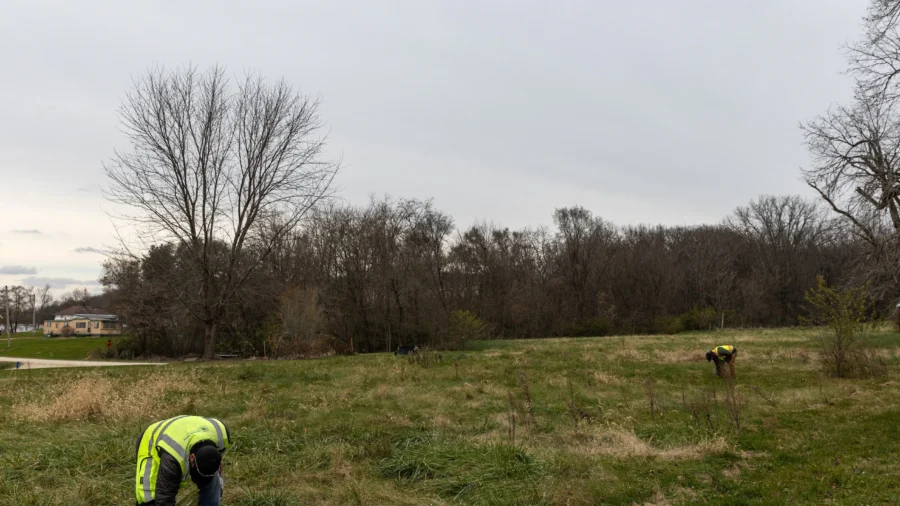
The EPA said Saturday no lead was detected in 38 post-detonation samples collected at public water supplies, including treated drinking water and untreated water at intake points. Results for soil, dust, tap water and additional air samples were still being received and validated.
In a statement on X, the agency said that the first lab results indicated the Army’s “controlled detonation … did not result in an elevation of lead in the water bodies that act as drinking water sources” and that there was “no detection of lead in drinking water sources taken after the detonation.”
Further results would be published as laboratories returned additional post-detonation data on water from taps, soil from structures and non-structures, dust from both the interior and exterior of buildings and other structures, as well as air.
Saturday’s announcement of initial lab tests followed 30 consecutive hours of air monitoring in which the EPA’s Xact instruments detected no airborne lead. The agency said it deactivated those instruments Thursday afternoon after consistently recording readings of 0.0 micrograms of lead per cubic meter of air.
Lead exposure can cause numerous health problems, including impairing cognitive development in children. Once lead settles in the environment, it does not break down.
Before the detonation, officials urged residents within a five-mile cone southwest of the munitions depot to temporarily relocate and advised others in the broader advisory area to shelter indoors and close their windows to limit potential exposure to lead dust.
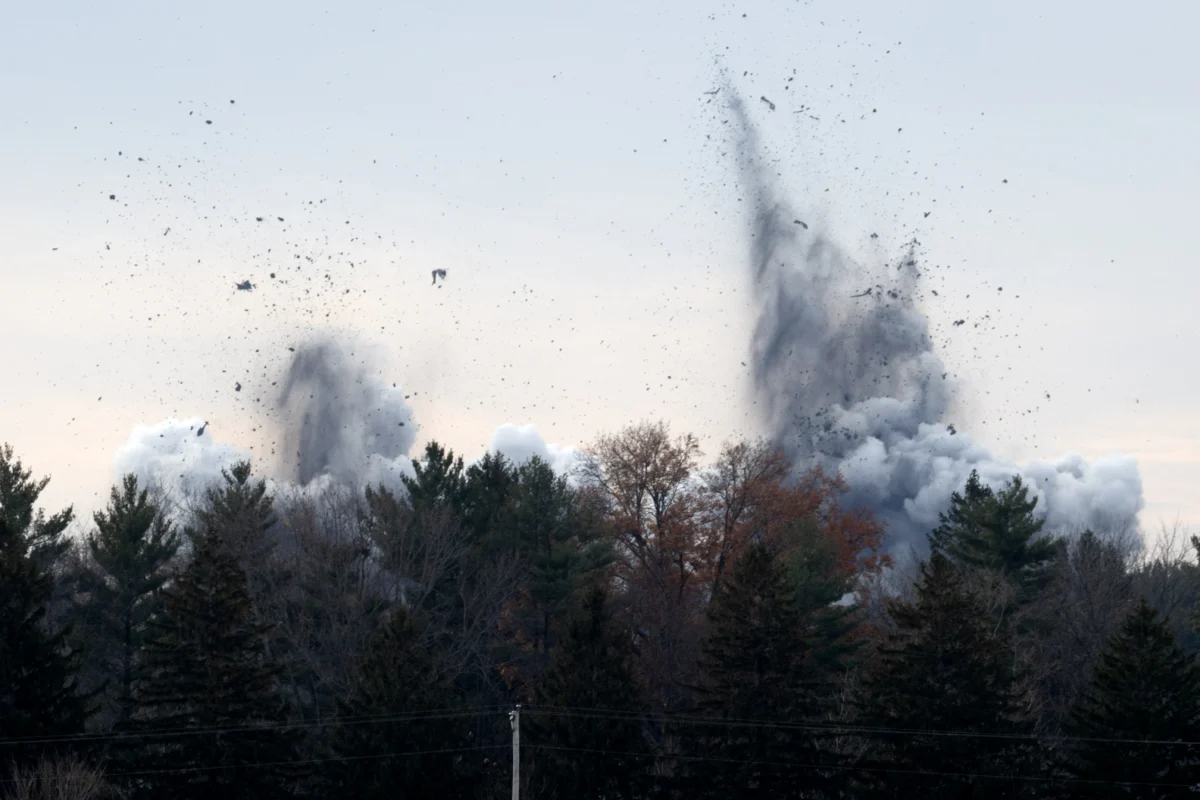
Debrie flies into the air after the detonation of lead azide in Middletown, Iowa, on Nov. 25, 2026. Scott Olson/Getty Images
The controlled detonation followed public concern and a legal challenge over the potential spread of lead dust into nearby communities and farmland.
The Iowa Environmental Council and Sierra Club sued to block the EPA’s emergency permit for the detonation, arguing in court filings that the agency had inadequately assessed the risks, imposed insufficient safeguards, and failed to properly consider alternative disposal methods.
In response, the EPA contended that Army munition experts had determined that the only safe option was controlled detonation due to an unacceptable risk of an uncontrolled explosion, and that sufficient protections were in place—including containment barriers and environmental monitoring and cleanup requirements—to minimize the risks.