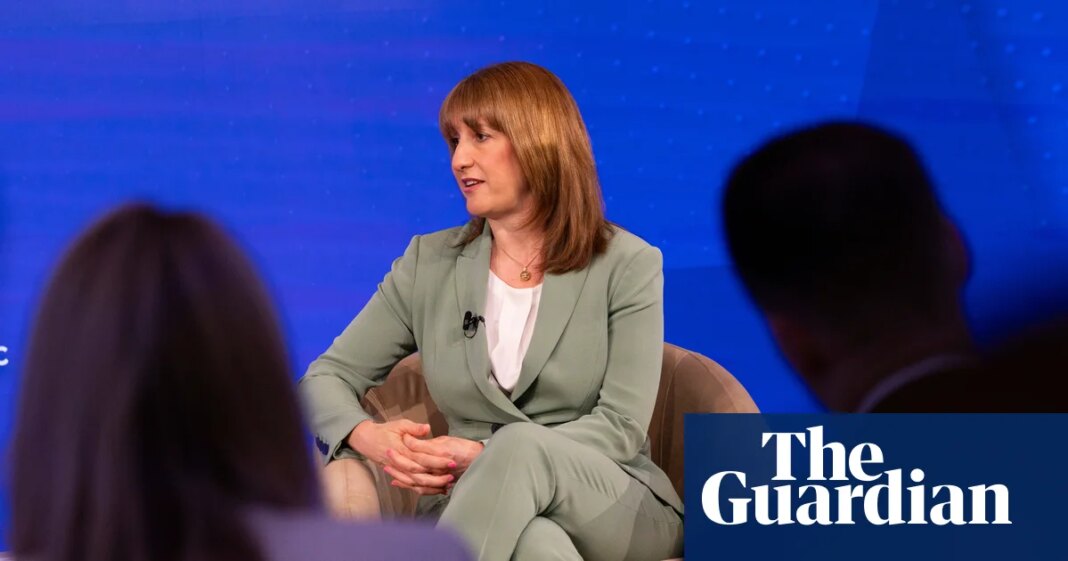
Rachel Reeves has stepped up her criticism of Donald Trump’s war on Iran, describing it as a “mistake” that has destabilised the global economy and damaged living standards around the world.
In a marked fraying of the transatlantic relationship, the British chancellor said Trump breaking off from diplomatic talks with Iran and launching airstrikes seemed to have left the president in a worse place than he started.
“I think it was a mistake to end those [talks with Iran] and to enter into conflict, because I’m not convinced that we are safer today than we were a few weeks ago,” she told an event in Washington.
Taking aim at the White House on the president’s home turf, the chancellor’s comments added to blunt criticism of him she made just before flying out on Tuesday, when she expressed frustration at the “folly” of his decision to go to war without a clear exit plan.
Speaking as she prepared to meet global finance ministers at this week’s spring meetings of the International Monetary Fund (IMF), Reeves said the war had hit living standards in the UK and the US.
Calling for the urgent reopening of the strait of Hormuz to calm global energy prices, she told the CNBC Invest in America conference the lack of clear US targets in negotiations with Iran had worsened the situation.
“We had the waterway open a few weeks ago. So, if now the objective is to reopen the strait of Hormuz? Well it was open at the beginning of this conflict,” Reeves added.
In an escalation of pressure on the White House by one of the US’s staunchest traditional allies, the chancellor said Trump’s lack of clear goals had laid the foundations for a lengthy conflict without much progress to end Iran’s nuclear ambitions.
“They don’t have a nuclear weapon today. And what do people think is the best way to stop that from happening? Is it through conflict or is it through diplomacy? And I believe it is through diplomacy,” she said. “There was a diplomatic channel open. The discussions, formal discussions, were happening.”
Reeves said she had come to the IMF meetings to “deliver that fair message” that the conflict in the Middle East was hitting living standards worldwide and required urgent de-escalation.
“We feel very strongly in our national interest that de-escalation is now the key priority,” she said. “That’s what businesses and families are telling me back home and that’s the message I’m coming here to Washington to give this week.”
The criticism adds to an increasingly tense atmosphere between Downing Street and the White House. After a strategy of Keir Starmer seeking to mollify the president, which was credited for the UK securing the first US trade deal to mitigate swingeing tariffs, relations have soured over the prime minister’s decision not to join in offensive actions against Iran.
Trump’s attacks on Starmer have become increasingly personal, and Wednesday he threatened to rip up the bilateral deal, warning it could “always be changed”. He also posted a link on his Truth Social platform to a Sun article attacking Starmer for spouting “hot air” on the UK’s defence spending commitments.
The prime minister hit back on Wednesday, telling MPs he was “not going to yield” to Trump’s trade pressure, saying such threats would not affect his stance on the Iran war.
Despite the fraying of the special relationship, Reeves claimed the UK remained on good terms as she prepared to hold talks with her US counterpart, Scott Bessent. The US Treasury secretary had suggested on Tuesday that the economic damage from the Iran war was a “bit of pain” worth the long-term security.
“Friends are allowed to disagree on things,” Reeves said. “When you are friends you can speak your truth and deliver that fair message,” she said.
The IMF warned on Tuesday that a further escalation in the Iran war could trigger a global recession that would affect the UK more than any of the other G7 nations.
The Washington-based fund added on Wednesday that global government debt levels risked being pushed to the highest point since the second world war amid the economic fallout.
Calling for an end to the war, the IMF managing director, Kristalina Georgieva, warned it was having a “very large” shock for the world economy that would include hitting the US. “The sooner it ends the better for everybody,” she said.
Speaking as the UK government prepares to announce an expansion in energy support for businesses, amid tight pressure on the UK public finances, Reeves said the bleak IMF outlook was one of the reasons she had come to Washington with a tough message for Trump.
“We are a net importer of gas which does mean we are impacted by the conflict in the Middle East, which is why I do come with this message loud and clear along with 10 other countries,” she said.
“Our growth would be higher and inflation lower if this conflict comes to an end and that will only happen with de-escalation.”
It comes as Reeves and 10 other finance ministers issued a joint statement on the economic hit from the war containing thinly-veiled criticisms of the Trump administration.
Calling for the safe passage of energy supplies out of the Gulf, the finance ministers from nations including Australia, Japan, Spain and Sweden urged nations to respond to the war by working together and without imposing “unnecessary trade restrictions”.
Starmer is preparing to meet with Emmanuel Macron in Paris on Friday to discuss operations to ensure the safe passage of shipping through the strait of Hormuz. Reeves said when there was a “proper ceasefire” in the Middle East conflict that the UK was “willing to play our part” to keep oil supplies flowing.