It’s been called the new cash cow for British agriculture. Padel, the booming racquet sport that is a cross between tennis and squash, is fast becoming a popular revenue stream for farmers strangled by government policy and soaring costs. Thousands of farmers are said to be converting their agricultural barns into playing courts to meet the demand of what the Lawn Tennis Association calls the “world’s fastest growing sport” – because it’s more reliably profitable than harvesting crops.
Third generation farmer Andrew Medever, 55, and his wife Sarah, 54, who own 800 acres of arable land in Suffolk, are among them. “Last year we had a very dry spring, similar to this year, so we knew we were heading into a bad harvest – it was actually the worst harvest I’ve had in my entire farming career,” explains Andrew of their decision.
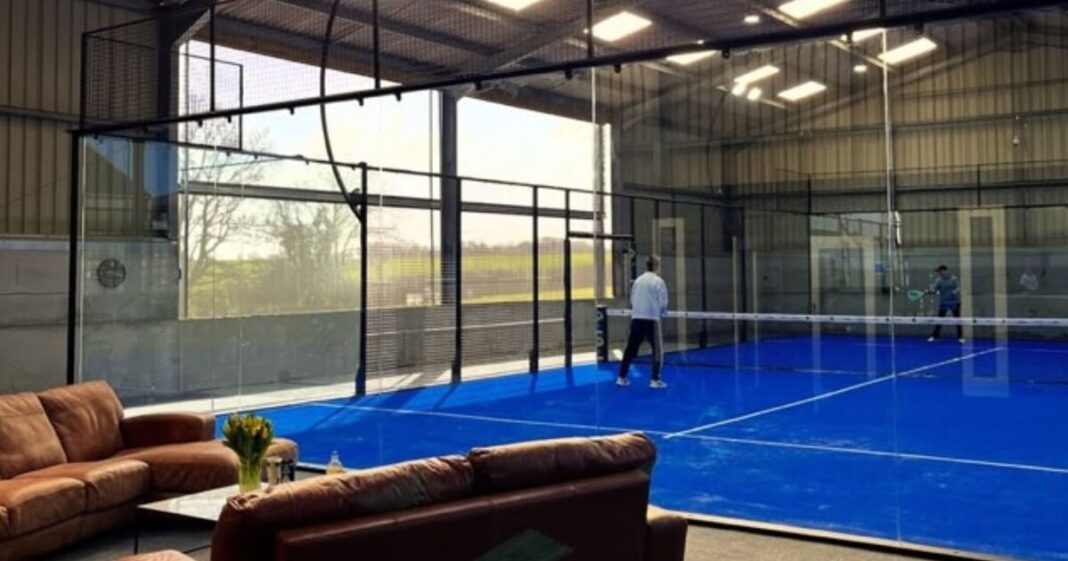
The couple’s son Henry, 25, had spoken to another farmer who had set up a padel court in a barn and was reaping the benefits from local demand for the sport. The family made an appointment with a padel installation firm and the rest is history.
“It was an agricultural machinery shed that was completely open at the front,” Sarah says. “We wanted people to experience the lovely views that we have so we installed big roller blinds to allow natural light in, keeping warm in the winter and in the summer months we can have the blinds up for the air to flow through.
“The feedback has been amazing. It’s a lovely setup and I overheard some players say, “Wow, this is amazing,” when they arrived for a match. We have such a strong USP.”
The all-weather courts are open seven days a week from 7am to 10pm, with 60 and 90 minute slots available from £10 upwards.
And padel is not the only side hustle the family has incorporated to generate a profit. “We have a sunflower field, where people can pay to pick their own sunflowers,” adds Andrew. “And we’ve got permission for a dog walking field – we’re always looking to increase our income through non-farming sources.”
He adds that farmers are “more exposed” than ever before.
“In the good old days we received a subsidy that was the bedrock of the business, underlying everything, however bad the harvest was,” he says. “There was a level of income there that was going to keep you farming and producing food next year, enabling you to buy the inputs needed. That’s not there now.
“These other income sources generate a decent return – they’re subsidising the growing of food in the UK. So if I put my proper ‘I’m a businessman hat on I would ask myself why am I farming?’ I’m not in the business of losing money and if growing crops doesn’t work, I shouldn’t do it.”
The family also realised the farm alone might not be enough to keep Henry employed in full time work. “There was always a future in farming,” sighs Andrew. “You had to work hard and you had to do a good job to make the money. Growing crops is exceptionally difficult at the moment. It’s more uncertain than I’ve ever seen it – through incredibly high costs, a scarcity of labour, unbelievably expensive machinery, and fuel which is a huge cost now.
“We’re really fighting to keep going in the UK. And that’s not just me – everybody’s in the same boat.”