
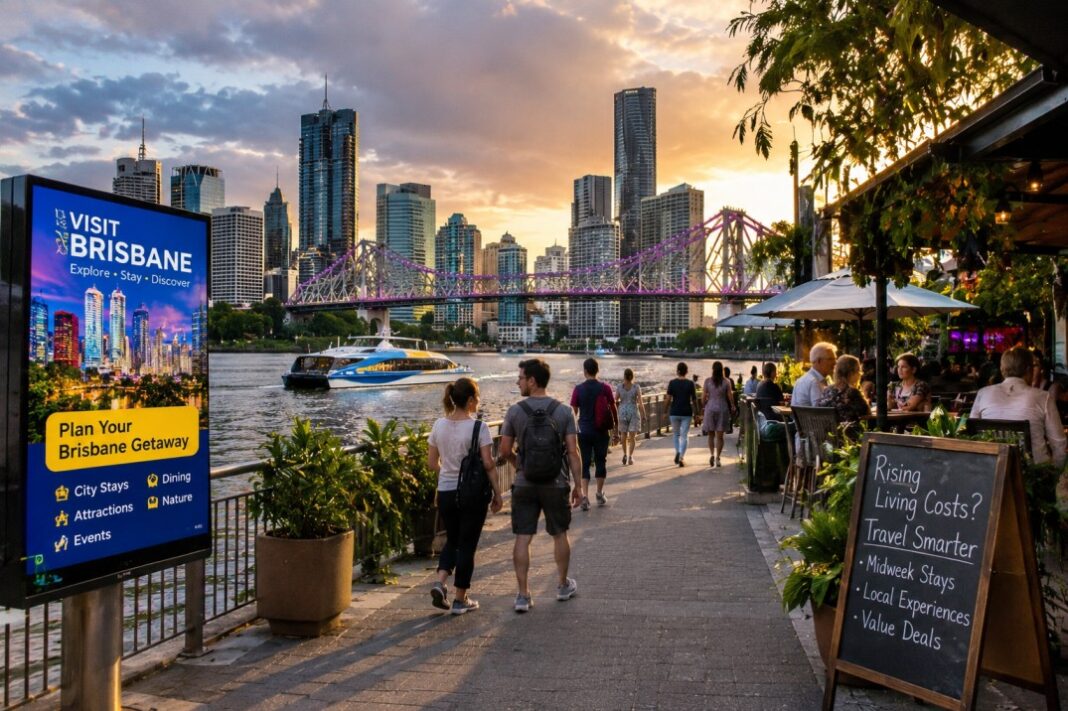

Australia’s domestic tourism industry could face increasing pressure from household living costs, as new research identifies substantial differences in financial concerns among residents of the country’s major cities. Brisbane has emerged as the city with the highest level of household bill-related concern, followed by Adelaide, Perth, Canberra and Darwin, according to a study conducted by Electrolux Australia.
The findings provide an important perspective on the financial environment in which domestic travel decisions are being made, particularly as accommodation, transport, dining and leisure activities compete with essential household expenses.
Advertisement
Advertisement
The research examined eight major Australian cities using a combination of online searches related to household bills, average salaries and consumer price increases. A composite Bills Worry Score was calculated for each destination, with results expressed on a scale of 100.
Brisbane recorded the highest score at 78.30, considerably ahead of Adelaide at 62.60 and Perth at 50.20.
Advertisement
Advertisement
Melbourne received the lowest score of 24.90, followed by Hobart at 31.90 and Sydney at 41.10.
Although the research was designed to measure indicators of household financial concern rather than tourism demand, its findings offer useful context for Australia’s hospitality and travel businesses.
Advertisement
Advertisement
Where household budgets are placed under pressure by rising everyday expenses, discretionary spending on holidays, restaurants, attractions and entertainment may be reconsidered.
For tourism operators, the challenge will involve understanding changing consumer priorities while maintaining the affordability and attractiveness of domestic travel experiences.
Advertisement
Advertisement
Brisbane Tops Australia’s Household Bill Anxiety Rankings in 2026
Brisbane has been identified as the Australian city with the highest Bills Worry Score, receiving 78.30 out of 100.
The result placed Brisbane substantially ahead of the seven other cities included in the Electrolux Australia study.
An average of 803.03 monthly online searches related to household bills was recorded per 100,000 residents.
This represented the highest search volume among the cities assessed.
Advertisement
Advertisement
Consumer prices for everyday items were also reported to have increased by 4.3% since February 2025.
The figure was identified as the second-highest inflation measure in the study.
Meanwhile, Brisbane’s average salary was reported at $73,000.
The combination of relatively strong price increases, mid-range earnings and elevated bill-related search activity contributed to the city’s leading position.
For the tourism industry, the findings may be relevant when assessing the financial circumstances of residents who participate in domestic travel.
However, the score does not establish that Brisbane residents are cancelling holidays or reducing tourism expenditure.
Advertisement
Advertisement
Such conclusions would require separate evidence concerning travel bookings and consumer spending.
Australian Cities Ranked by Household Bill Concerns
The Electrolux Australia study assessed eight cities using online search activity, average salaries and consumer price changes.
| Rank | City | Monthly Bill Searches per 100,000 Residents | CPI Increase | Average Salary | Bills Worry Score /100 |
|---|---|---|---|---|---|
| 1 | Brisbane | 803.03 | 4.3% | $73,000 | 78.30 |
| 2 | Adelaide | 722.62 | 3.5% | $70,000 | 62.60 |
| 3 | Perth | 555.41 | 4.9% | $77,000 | 50.20 |
| 4 | Canberra | 575.35 | 3.6% | $71,000 | 44.60 |
| 5 | Darwin | 625.41 | 3.1% | $72,000 | 42.00 |
| 6 | Sydney | 636.70 | 3.9% | $80,000 | 41.10 |
| 7 | Hobart | 387.15 | 3.6% | $65,000 | 31.90 |
| 8 | Melbourne | 501.90 | 3.3% | $75,000 | 24.90 |
Source: Electrolux Australia. The figures represent the study’s composite indicators of household bill concern. They do not directly measure tourism expenditure, hotel bookings or travel cancellations.
Adelaide Ranks Second as Household Costs Create Financial Pressure
Adelaide secured second place in the study with a Bills Worry Score of 62.60.
The city recorded an average of 722.62 bill-related online searches per 100,000 residents each month.
Its average salary was reported at $70,000, the second-lowest among the eight cities examined.
Advertisement
Advertisement
Consumer prices for everyday items increased by 3.5% over the period measured.
Although Adelaide’s inflation figure was lower than those recorded in several other cities, the combination of income levels and search activity contributed to its relatively high overall score.
From a tourism perspective, these findings provide context for the affordability considerations that may influence discretionary spending.
Domestic holidays, restaurant visits and entertainment experiences are often funded from income remaining after essential household expenses have been met.
When that remaining income is limited, greater attention may be directed towards the overall cost of travel.
For accommodation providers and tourism operators, clear pricing and packages offering recognisable value may become increasingly relevant.
Advertisement
Advertisement
However, no direct change in Adelaide’s tourism demand was measured by the Electrolux study.
Perth Records Highest Inflation Among Eight Australian Cities
Perth was ranked third with a Bills Worry Score of 50.20.
The city recorded the highest consumer price increase among the destinations examined, with everyday costs rising by 4.9% since February 2025.
An average salary of $77,000 was reported, placing Perth above several other cities in the income comparison.
Monthly bill-related search activity reached 555.41 searches per 100,000 residents.
Despite the comparatively higher salary, the elevated inflation measure contributed to Perth’s third-place ranking.
Advertisement
Advertisement
The findings demonstrate that household financial concerns cannot be assessed through income alone.
The relationship between earnings and the cost of essential goods and services is also important.
For Western Australia’s tourism sector, the figures may be relevant to understanding the broader financial conditions facing local consumers.
Domestic travel experiences, regional holidays and leisure activities may compete with household expenses for available spending.
However, the research does not establish a direct relationship between Perth’s inflation rate and actual tourism bookings.
Canberra Ranks Fourth as Lower Salaries Meet Rising Everyday Costs
Canberra was placed fourth in the Bills Worry Index, receiving a score of 44.60.
Advertisement
Advertisement
The Australian capital recorded 575.35 monthly bill-related searches per 100,000 residents.
Its average salary was reported at $71,000, the third-lowest among the cities examined.
Consumer prices increased by 3.6%, representing the fourth-highest inflation figure in the study.
The results indicate that household financial concerns were influenced by a combination of earnings and everyday living costs.
For Canberra’s tourism and hospitality businesses, these findings may provide useful context when considering local leisure spending.
Restaurants, cultural attractions, hotels and entertainment venues serve different customer segments, including residents and visitors from other regions.
Advertisement
Advertisement
Where household budgets are constrained, local discretionary spending may become more selective.
However, the extent of any effect on Canberra’s tourism economy would need to be established through separate visitor and business performance data.
Darwin Enters Top Five Despite Lowest Inflation Rate
Darwin completed the five highest-ranked cities with a Bills Worry Score of 42.00.
The result was particularly notable because the city recorded the lowest consumer price increase in the study.
Everyday prices were reported to have risen by 3.1%.
Nevertheless, Darwin generated 625.41 monthly bill-related searches per 100,000 residents, the fourth-highest search rate among the eight cities.
Advertisement
Advertisement
The city’s average salary was recorded at $72,000.
The findings suggest that relatively lower inflation does not necessarily correspond with lower levels of household financial concern.
Income levels and existing expenditure commitments may also influence how rising costs are experienced.
For tourism businesses operating in Darwin and the Northern Territory, the study provides additional context for understanding local consumer conditions.
However, no direct evidence was presented showing that the reported financial concerns had reduced tourism participation.
Sydney, Hobart and Melbourne Record Lower Bills Worry Scores
Sydney, Hobart and Melbourne occupied the final three positions in the ranking.
Advertisement
Advertisement
Sydney received a score of 41.10, placing it sixth.
The city recorded 636.70 monthly bill-related searches per 100,000 residents and an average salary of $80,000, the highest among the cities studied.
Consumer prices increased by 3.9%.
Hobart followed in seventh place with a score of 31.90.
The Tasmanian capital recorded 387.15 bill-related searches per 100,000 residents, the lowest search rate in the study.
Its average salary was $65,000, while consumer prices increased by 3.6%.
Advertisement
Advertisement
Melbourne received the lowest overall score of 24.90.
The city recorded 501.90 monthly searches per 100,000 residents, an average salary of $75,000 and consumer price growth of 3.3%.
The results demonstrate that household financial concerns vary across Australia’s major urban centres.
However, a lower Bills Worry Score should not be interpreted as evidence that residents are unaffected by living costs.
Cost-of-Living Pressures Could Influence Australian Domestic Tourism
The Electrolux Australia findings raise important questions about the relationship between household expenditure and discretionary travel.
Domestic tourism spending is influenced by several factors, including available income, transport costs, accommodation prices and personal travel preferences.
Advertisement
Advertisement
When essential expenses increase, households may have less financial flexibility for optional purchases.
Travel experiences can be affected because holidays often involve several costs incurred within a relatively short period.
Accommodation, meals, transportation, attractions and entertainment may all contribute to the total price of a trip.
For tourism businesses, affordability can therefore become an important consideration when travel products are developed.
Shorter holidays, flexible itineraries and clearly priced packages may appeal to consumers seeking greater control over spending.
However, the Electrolux study did not measure changes in domestic travel behaviour.
Advertisement
Advertisement
Its findings should therefore be treated as indicators of the wider household financial environment rather than direct evidence of reduced tourism demand.
Australian Hotels and Hospitality Businesses Face Changing Consumer Priorities
Hotels and other accommodation providers may need to consider the financial pressures affecting potential domestic customers.
The price of accommodation represents one component of the overall holiday budget.
Additional expenses involving meals, transport and activities can influence the affordability of a trip.
For hospitality businesses, transparent pricing may help prospective visitors understand the total cost of their stay.
Packages combining accommodation with selected services may also provide a clearer indication of overall value.
Advertisement
Advertisement
However, pricing strategies must remain commercially sustainable for operators.
Rising operating costs can affect hotels and restaurants as well as households.
Businesses may therefore face the challenge of maintaining service standards while responding to customers who are increasingly conscious of expenditure.
The study’s findings provide useful context for these commercial considerations, although they do not establish how individual hotel markets are performing.
Regional Tourism Could Benefit From Value-Focused Travel Experiences
Domestic tourism businesses outside Australia’s major cities may also find the research relevant.
Regional holidays can provide opportunities for travellers seeking different experiences within their own country.
Advertisement
Advertisement
However, the affordability of regional travel depends on transportation, accommodation and activity costs.
For tourism operators, clearly structured itineraries may help visitors plan expenditure more effectively.
Local attractions, cultural experiences and nature-based activities can be incorporated into packages designed around different budgets.
Regional businesses may also benefit from cooperation between accommodation providers, restaurants and tour operators.
Such arrangements can simplify travel planning and improve the visibility of local experiences.
Nevertheless, the commercial opportunities associated with value-focused travel will depend on actual consumer demand.
Advertisement
Advertisement
The Electrolux study provides information about household bill concerns but does not identify which regional tourism destinations are gaining or losing visitors.
Electrolux Australia Highlights the Relationship Between Wages and Household Costs
The findings were discussed by Anders Lofgren, Marketing Expert at Electrolux Australia.
Particular attention was directed towards the pressure created by rising everyday living expenses.
Brisbane’s position was highlighted because of its combination of high bill-related search activity, relatively strong inflation and mid-range earnings.
Darwin was also identified as a notable result.
Despite recording the lowest inflation rate among the cities examined, Darwin remained within the five highest-ranked locations for household bill concern.
Advertisement
Advertisement
The findings were presented as evidence that financial pressure cannot be understood through consumer price increases alone.
The relationship between wages and living costs was also identified as an important consideration.
For the tourism industry, this distinction is relevant because the ability to spend on travel may be influenced by both household earnings and essential financial commitments.
Digital Search Behaviour Provides New Insights Into Consumer Financial Concerns
The study incorporated online search activity as one of its three principal indicators.
Bill-related searches were measured relative to population, allowing comparisons between cities of different sizes.
This approach provides an indication of how frequently residents search for information associated with household expenses.
Advertisement
Advertisement
However, online search behaviour does not directly establish personal anxiety or financial hardship.
Searches may be undertaken for several reasons, including routine account management, price comparisons and general information.
The composite score therefore reflects the study’s chosen methodology rather than a clinical or survey-based measurement of stress.
For tourism businesses, digital consumer research can provide useful context when combined with more direct information about travel intentions and spending.
Booking data, visitor surveys and accommodation performance figures would be required to establish whether household financial concerns are influencing actual travel decisions.
Australia’s Tourism Industry Faces a Changing Affordability Environment
The findings highlight differences in the household financial conditions experienced across Australia’s major cities.
Advertisement
Advertisement
Brisbane, Adelaide and Perth recorded the highest Bills Worry Scores, while Melbourne, Hobart and Sydney received the lowest.
These differences may be relevant to tourism businesses assessing the broader economic environment in which domestic customers make purchasing decisions.
However, the relationship between household bills and travel demand is not necessarily uniform.
Some consumers may continue to prioritise holidays despite financial pressures, while others may adjust travel frequency, duration or expenditure.
International tourism demand may also be influenced by different economic conditions from those affecting Australian residents.
Consequently, the findings should not be used as a standalone forecast of hotel occupancy, visitor arrivals or tourism revenue.
Advertisement
Advertisement
A broader assessment would require additional data concerning consumer travel intentions, accommodation bookings and destination performance.
Australia Tourism Outlook 2026: Affordability and Value Remain Important
The Electrolux Australia study provides a new perspective on household financial concerns across eight major Australian cities.
Brisbane emerged with the highest Bills Worry Score of 78.30, followed by Adelaide at 62.60 and Perth at 50.20.
Canberra and Darwin completed the five highest-ranked locations.
Melbourne recorded the lowest score at 24.90, while Hobart and Sydney also appeared towards the lower end of the ranking.
The findings demonstrate that household bill concerns are influenced by a combination of online search activity, consumer price increases and average salaries.
Advertisement
Advertisement
For Australia’s tourism industry, the results provide context for understanding the financial pressures that may shape domestic consumer decisions.
Hotels, restaurants, attractions and regional tourism operators may benefit from monitoring affordability expectations while maintaining service quality and commercially sustainable pricing.
As household budgets continue to influence consumer choices, the perceived value of travel experiences is likely to remain an important consideration.
However, the extent to which bill-related concerns translate into changes in tourism demand will need to be established through direct travel and hospitality industry data.

