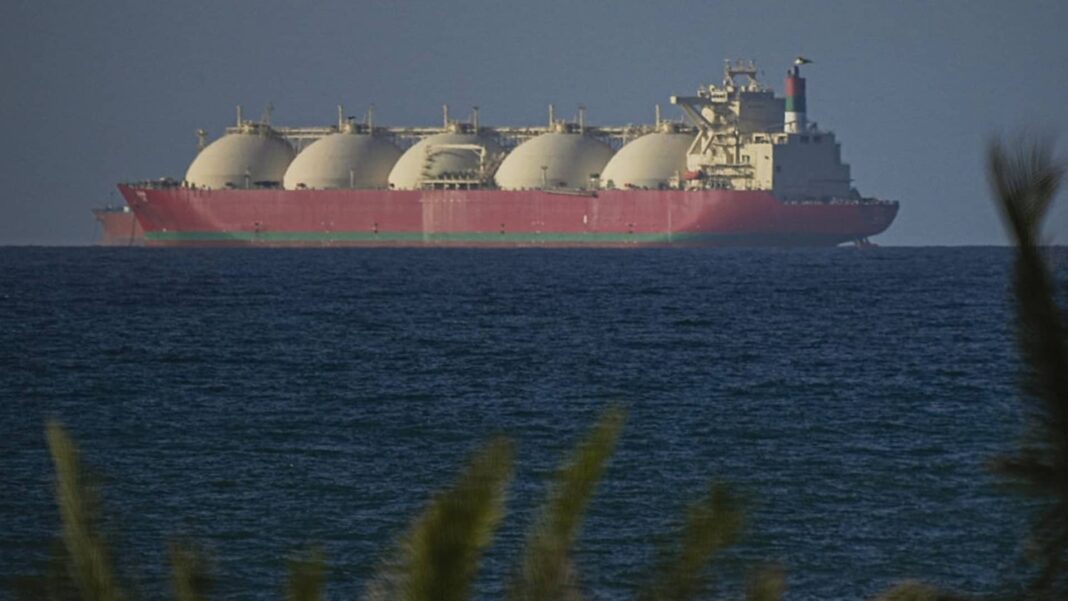

Iran on Friday declared the Strait of Hormuz is open to commercial ships during the ceasefire between Israel and Lebanon, but confusion quickly emerged about whether the sea lane was really open without conditions.
“In line with the ceasefire in Lebanon, the passage for all commercial vessels through Strait of Hormuz is declared completely open for the remaining period of ceasefire,” Foreign Minister Seyed Abbas Araghchi said on social media.
However, vessels must transit through a “coordinated route” announced by Iran’s maritime authorities, Araghchi said. It is unclear whether Tehran will force ships to pay a toll to pass the strait.
President Donald Trump on Friday thanked Iran for opening the strait in a social media post. But Trump said the U.S. naval blockade of Iran’s ports will remain in effect until an agreement is reached with Tehran.
Iranian media affiliated with the Revolutionary Guard described a limited reopening of the strait. Commercial ships must coordinate with Iranian forces, a source close to Iran’s Supreme National Security Council told Tasnim News.
Ships are not allowed to pass if they or their cargoes are linked to hostile nations, according to the Tasnim report. The strait will be closed if the U.S. naval blockade continues, according to the report.
Oil prices plunged more than 10% on Friday to below $90 per barrel. About a fifth of the world’s crude supplies passed through the strait before the war. The closure of the sea lane, which connects the Persian Gulf to global energy markets, has triggered the biggest oil supply disruption in history.
Israel and Lebanon agreed Thursday to a 10-day ceasefire starting at 5 p.m. ET that evening. Israel’s military campaign in Lebanon against the militant group Hezbollah, who are close allies of Iran, has been a sticking point in negotiations between Washington and Tehran.
Trump agreed to a two-week ceasefire on April 7 in exchange for Iran completely opening the strait. But Iran’s parliamentary speaker, Mohammad Bagher Ghalibaf, accused the U.S. of violating the agreement by allowing Israel to continue its campaign in Lebanon.
The strait has remained almost completely closed during the U.S.-Iran ceasefire as the two countries disputed the terms of the agreement. Just a few commercial vessels are transiting the waterway daily.
Negotiations between Vice President JD Vance and Ghalibaf last weekend in Pakistan failed to produce an agreement to permanently end the U.S. war with Iran. Trump said U.S. and Iranian negotiators could meet again this weekend in Pakistan for a second round of talks.