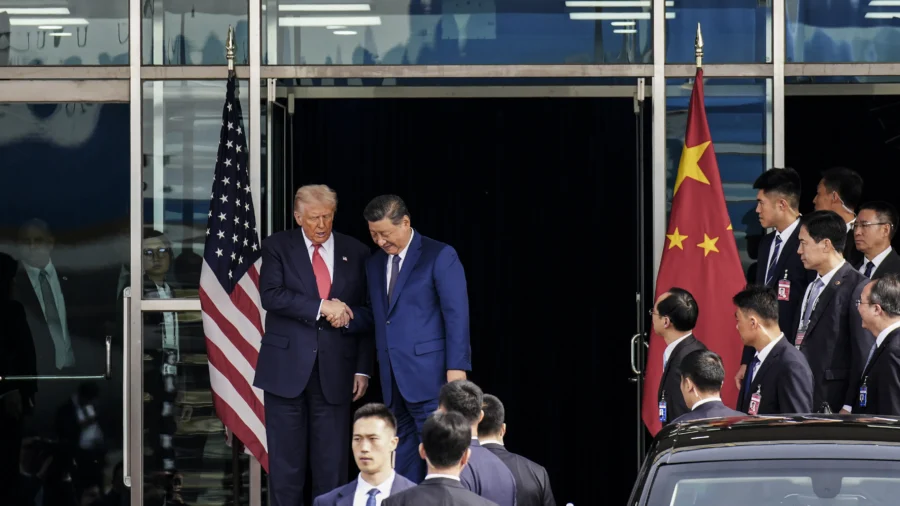
“I had a truly great meeting with President Xi of China.”
Trump has returned to Washington after a week-long trip to Asia, which also included stops in Malaysia and Japan.
China to Buy US Soybeans
U.S. Treasury Secretary Scott Bessent said Washington and Beijing had finalized a trade framework reached last week following two days of negotiations in Kuala Lumpur, Malaysia.
As part of the agreement, he said, China has committed to buying “a minimum of 25 million metric tons” of American soybeans each year for the next three years.
For the current season through January, Beijing agreed to buy 12 million metric tons of soybeans from the United States, according to Bessent.
Trump earlier said that China could begin purchasing “tremendous amounts of the soybeans” and other farm products “immediately.”
U.S. Agriculture Secretary Brooke Rollins announced in a social media post on Oct. 29 that China had booked multiple shipments of U.S. soybeans.
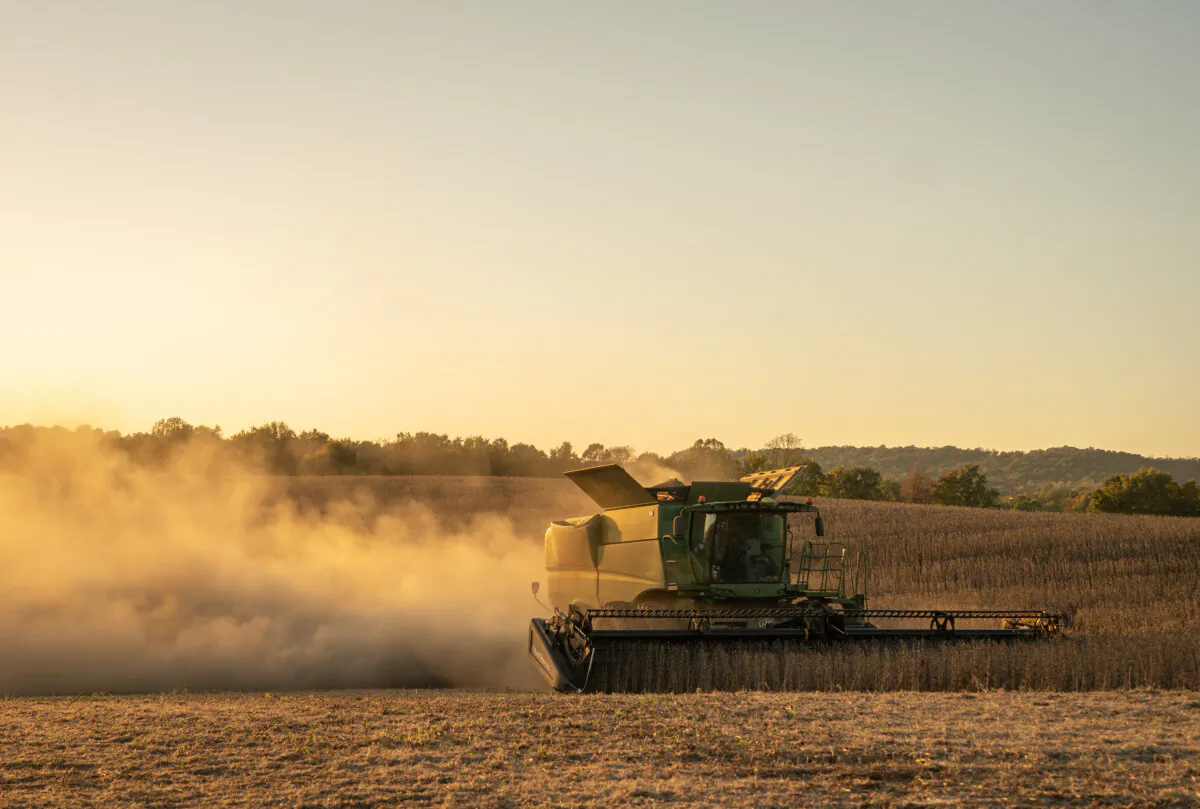
A combine harvests soybeans in Marion, Ky., on Oct. 14, 2025. Jan Sonnenmair/Getty Images
Rare Earth to Flow
Issues surrounding China’s supply of rare earth minerals—essential for manufacturing a wide range of products from electric vehicles to military jets and submarines—were addressed during the meeting, according to Trump.
“All of the rare earth has been settled, and that’s for the world,” he told reporters aboard Air Force One shortly after the talks with Xi.
Trump said Beijing had agreed to a one-year pause on its plan to impose stringent export controls on rare earths. He mentioned that the agreement could be extended after a year.
“There’s no roadblock at all on rare earth. That will hopefully disappear from our vocabulary for a little while,” he said.
The Epoch Times has reached out to the White House for comment.
Port Fees Pause
Aside from export control measures, Beijing and Washington will suspend port fees for one year, according to the statement from the Chinese Ministry of Commerce.
According to the Chinese Commerce Ministry, Beijing will now suspend its countermeasures for a year, while the United States pauses related actions stemming from the Section 301 probes into China’s maritime, logistics, and shipbuilding sectors.
U.S. Trade Representative Jamieson Greer, speaking to reporters on Air Force One, also mentioned this decision.
“We’re going to postpone that while we negotiate with them about that issue,” Greer said.
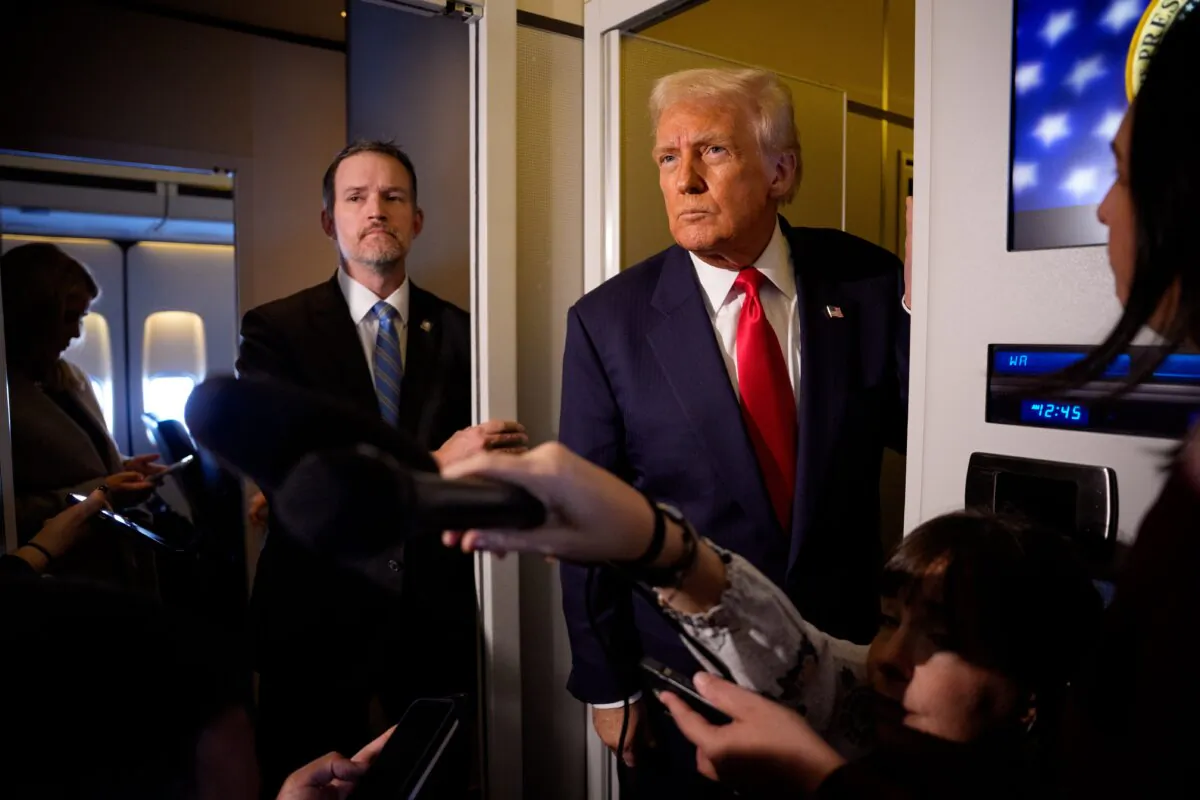
U.S. Trade Representative Jamieson Greer and President Donald Trump speak to members of the media aboard Air Force One in flight on Oct. 30, 2025. Andrew Harnik/Getty Images
“We think we have a good path forward,” Greer said.
US to Halve Fentanyl Tariffs
The Trump administration will cut the 20 percent fentanyl-related tariffs to 10 percent, effective immediately. The adjustment brings the total levies on Chinese goods to 47 percent.
The president expressed confidence that Beijing would take “strong action” to stop the flow of precursor chemicals used in fentanyl production.
“I believe [Xi is] gonna work very hard to stop the death that’s coming in,” Trump told reporters while departing from South Korea.
In return, China will “correspondingly adjust its countermeasures” against the United States, the regime’s commerce ministry said in a statement.
In the order, Trump said Beijing subsidizes chemical companies that produce fentanyl precursors, supports the drug trafficking network through money laundering schemes and other means, and could have shut down these operations if it wished.
Trump to Visit China Next April
Trump confirmed a visit to China in April 2026.
Xi will visit the United States “sometime after that,” Trump said, saying the Chinese leader could be visiting either Palm Beach, Florida, or Washington.
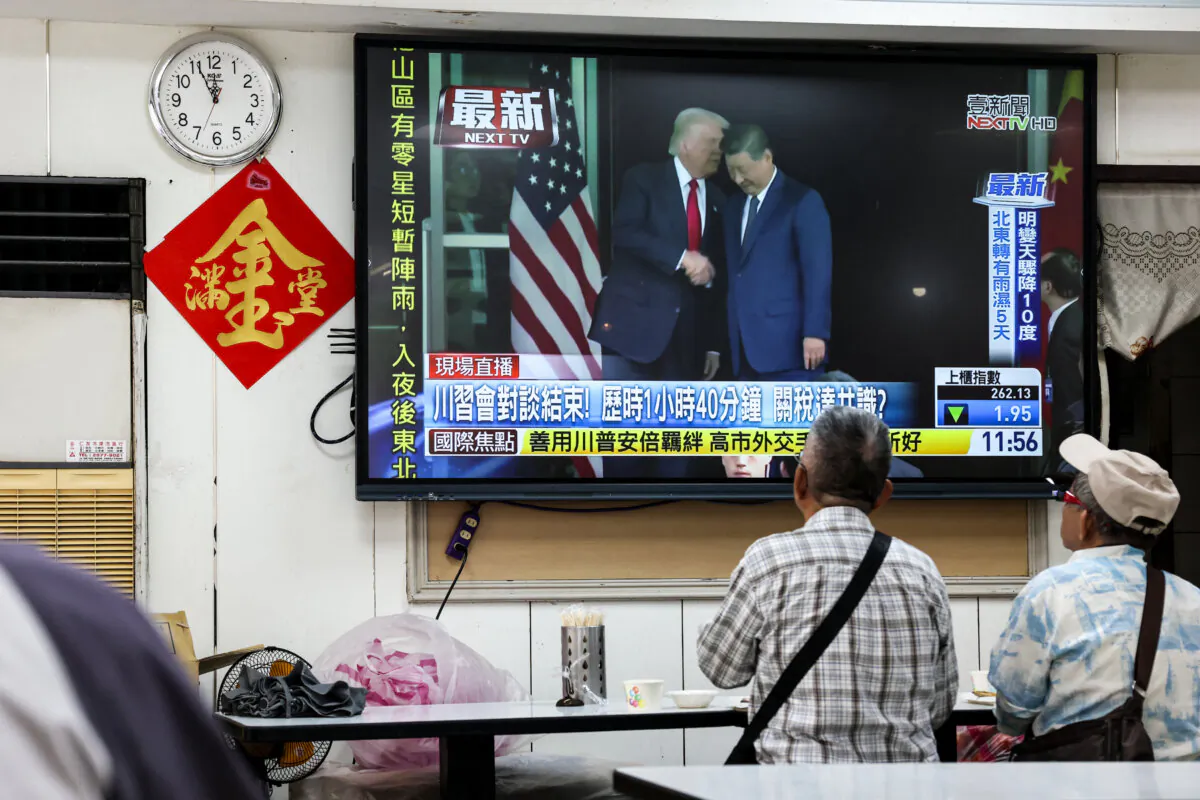
People watch a news program showing footage of the meeting between President Donald Trump and Chinese leader Xi Jinping in South Korea in Taipei, Taiwan, on Oct. 30, 2025. I-Hwa Cheng / AFP via Getty Images
Trump visited China during his first term in office in November 2017. Following the trip, companies from the two countries signed trade and investment deals worth more than $250 billion, although some had been in the works prior to the visit and many were nonbinding.
Taiwan
The issue of Taiwan, which Trump had said he would raise, did not come up during his meeting with Xi.
“It never came up. Taiwan never came up. It was not discussed, actually,” he said.
Before the Trump–Xi meeting, Taiwanese Foreign Minister Lin Chia-lung said on Oct. 30 that Taiwan is “confident” in its relations with the United States and that the two sides have “close communication channels,” dismissing speculation that Taiwan’s interests might be compromised by discussions between the two world leaders.
Taipei and Washington are not formal diplomatic allies, but the United States has been the island’s largest arms supplier for its self-defense.
TikTok Deal
Trump did not mention TikTok after he met with Xi. However, after the meeting, the Chinese Commerce Ministry announced that it will “properly resolve issues” related to TikTok, without providing details.
Bessent, speaking in a later interview with Fox News, said the TikTok ownership transfer deal has received Beijing’s approval and that he anticipated that the process could advance in the near future.
“In Kuala Lumpur, we finalized the TikTok agreement in terms of getting Chinese approval,” he told Fox News.
“And I would expect that would go forward in the coming weeks and months, and we’ll finally see a resolution to that.”
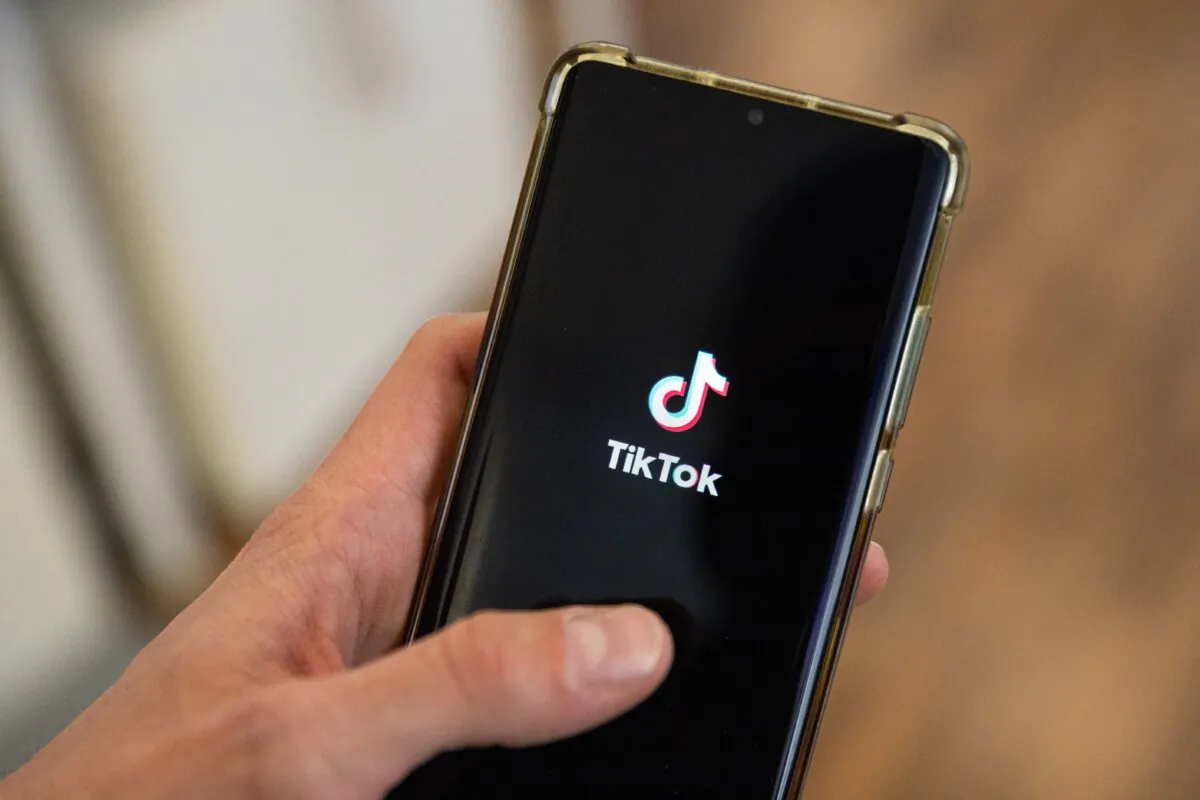
A man holding a smartphone displaying the TikTok logo in an office in Paris on April 19, 2024. Antonin Utz/AFP via Getty Images
‘American Energy’
In a post on Truth Social after meeting Xi, Trump announced a potential “American energy” deal with China, saying that Secretary of Energy Chris Wright and Secretary of the Interior Doug Burgum are working to complete an agreement that would see China make a “very large-scale transaction” of oil and gas from Alaska.
China, the world’s largest importer of LNG, purchased about 5 percent of LNG and 2 percent of crude oil from the United States in 2024, according to Chinese customs data.
The Semiconductor Question
Trump and Xi discussed semiconductors and chips during their meeting, but they didn’t discuss approving the sale of Nvidia’s advanced Blackwell artificial intelligence chips.
“[China is] going to be talking to Nvidia and others about taking chips,” Trump said, but the United States will be acting as a “sort of arbitrator or the referee.”
Asked by a reporter whether his administration would authorize exports of Blackwell chips, Trump replied, “We’re not talking about the Blackwell.”
Trump said he would be speaking with Nvidia CEO Jensen Huang, who has been in South Korea participating in the APEC summit and meeting with global leaders and top Korean executives.
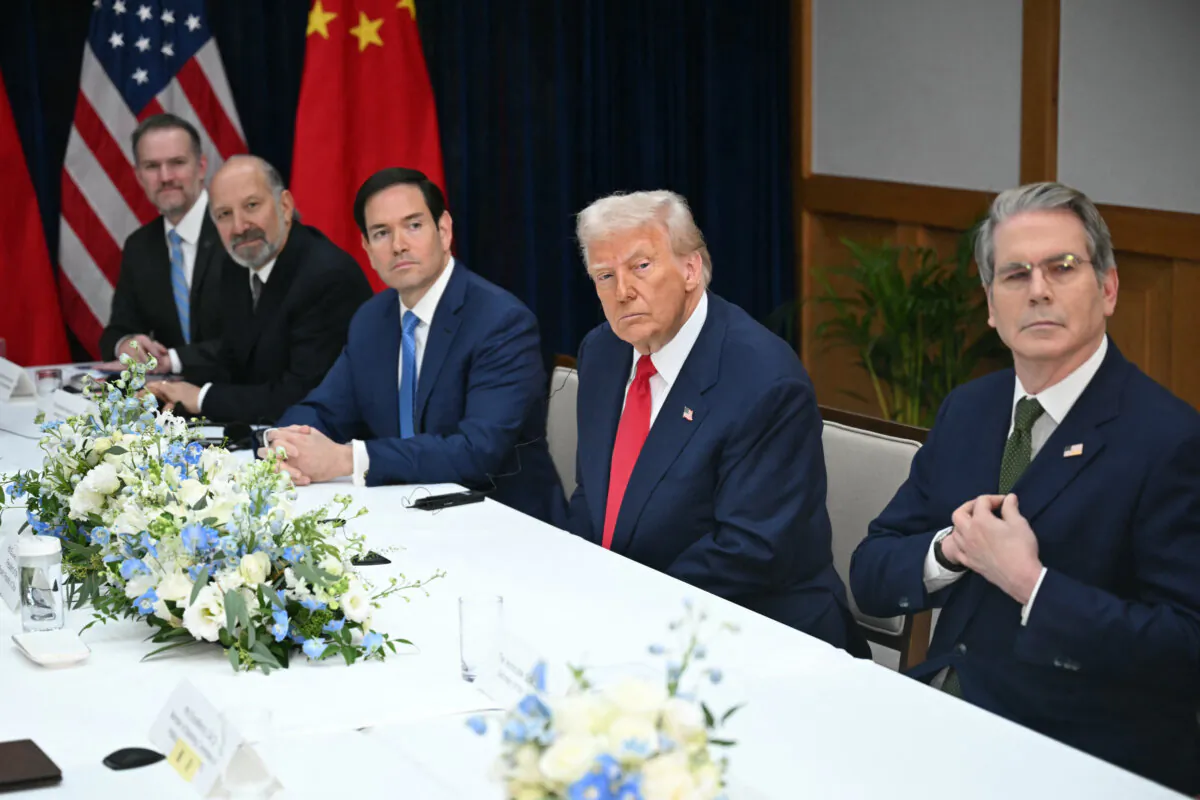
(L-R) U.S. Trade Representative Jamieson Greer, Secretary of Commerce Howard Lutnick, Secretary of State Marco Rubio, President Donald Trump, and Treasury Secretary Scott Bessent attend talks with Chinese leader Xi Jinping at the Gimhae Air Base in Busan, South Korea, on Oct. 30, 2025. Andrew Caballero-Reynolds/AFP via Getty Images
Catherine Yang contributed to this report.