One of the endearing hallmarks of cinema is the ability for audiences to rewatch their favorite classics over and over, allowing lauded masterpieces to thrive with old and new viewers. Some can quote movies like The Wizard of Oz or The Princess Bride after watching them repeatedly. Others may nitpick specific details after losing count of how many times they watched their favorite franchise, like The Lord of the Rings or Star Wars. Even when favorite characters are set to meet grisly fates or movies embrace darker themes, like Pulp Fiction and Alien, they are steadily viewed without hesitation.
So, why do some acclaimed masterpieces remain difficult to revisit, even for devoted cinephiles? These are films praised for their artistry but laden with emotionally devastating themes or intense, unsettling content. Whether rooted in harsh realities, exploring deeply depressing circumstances, or imagining bleak futures, these works are lauded as essential viewing. Yet, their powerful impact makes repeat watches a challenge.
Manchester by the Sea (2016)

Manchester by the Sea is a critically acclaimed drama that earned six Academy Award nominations, including Best Picture. Writer and director Kenneth Lonergan won the Oscar for Best Original Screenplay, with Casey Affleck winning for Best Actor. However, the lauded drama is also horrifically depressing, as the story centers on a man who accidentally kills his children.
While most films would craft a story about overcoming depression following traumatic personal events, Manchester by the Sea embraces a more somber tone by focusing on surviving it instead. Viewers can appreciate the stellar performances, with Michelle Williams shining as always, but the realistic portrayal of grief shows that some wounds are far too deep to ever truly heal. Though that theme makes for great cinema, it’s not something you’ll want to watch again.
‘Sophie’s Choice’ (1982)

Sophie’s Choice earned five Academy Award nominations, including one for Meryl Streep, who won for Best Actress. While a romance story runs through the film, Sophie (Streep) is a Holocaust survivor, with every moment feeling overshadowed by the unshakable memories of her past. The movie pulls viewers into Sophie’s world of grief, trauma, and guilt, immersing them in the weight of her suffering. These intense emotions reinforce the film’s powerful central dilemma, making Sophie’s journey deeply affecting.
Few films demand as much emotional investment as Sophie’s Choice, whose unforgettable dilemma is often discussed yet rarely confronted in detail. Imagine the unbearable agony when Sophie, a mother broken by war, is forced by a Nazi doctor to decide which of her children will live. This single devastating moment colors her every action, leaving viewers to ache alongside her. The film’s status as a classic is undeniable, but experiencing Sophie’s pain makes it nearly impossible to watch without tears.
‘Threads’ (1984)

Threads is a thought-provoking work of speculative sci-fi that explores the possible consequences of a nuclear holocaust. Presented as a documentary, the fictional work offers an uncompromising examination of societal collapse and the long-term effects of nuclear carnage. Noted for its scientific plausibility and extreme realism, Threads serves as a stark warning about the profound and lasting consequences of nuclear conflict.
Threads has an impressive 100% on Rotten Tomatoes, with audiences also giving the classic a notable 91%. The reviews consistently praise the film while emphasizing its bleak, impactful presentation. Helen Wood describes Threads as “shocking, harrowing, and hard to watch,” and Grant Watson notes, “It is not simply a powerful film, but an important one too.” While the consensus is unanimous, it’s tough to watch even once.
‘Requiem for a Dream’ (2000)

Requiem for a Dream is one of director Darren Aronofsky’s most impactful films, serving as a precursor to themes he explores in later works such as Black Swan and Mother!. It stands out for its unflinching look at addiction and its devastating effects on hope and aspiration. The film follows several characters aiming for brighter futures, but each battles drug addiction in their own way. Gradually, they are stripped of hope, ending as shadows of their former selves. Against this backdrop, the film’s stylistic choices further amplify the emotional impact.
Requiem for a Dream stands as a cautionary tale, its already challenging subject matter heightened by Aronofsky’s frantic, often jarring editing style. The director’s distinctive approach immerses viewers in the characters’ downward spirals, creating an experience at once intense and harrowing. While the central performances and soundtrack are notable, the film remains difficult to revisit due to its relentless emotional impact.
‘Uncut Gems’ (2019)
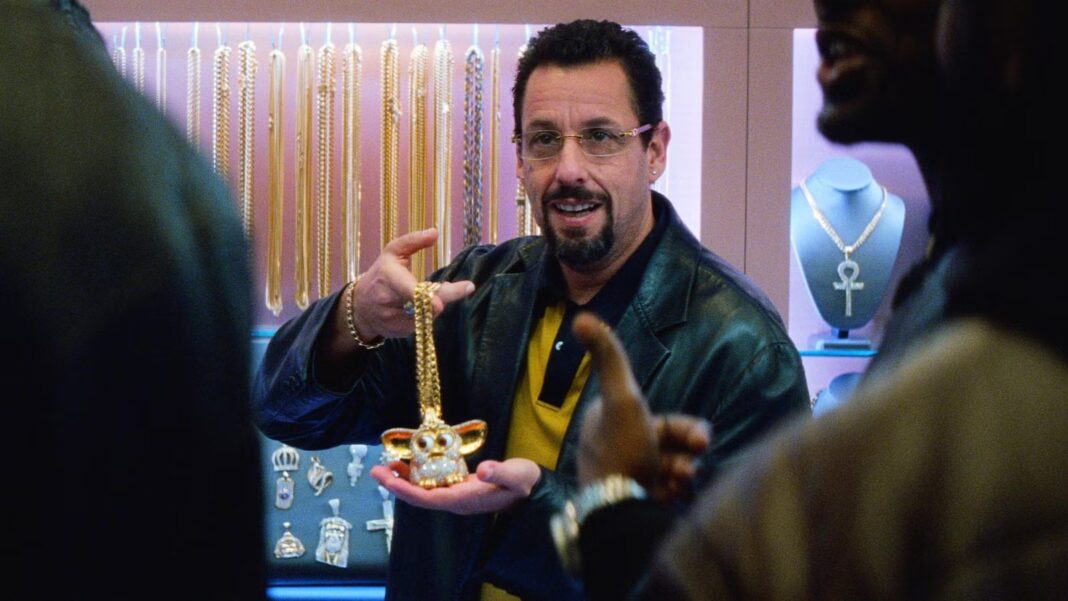
Uncut Gems is remembered for Adam Sandler’s high-energy performance, which several high-profile award ceremonies sadly overlooked. He plays Howard Ratner, a fast-talking New York City jeweler drowning in gambling debts. Howard is deeply unlikable and hard to sympathize with, but Sandler’s career-best performance reveals him as a tragic addict.
Uncut Gems is a continuously nerve-wracking journey through Howard’s life and debts. Every time Howard finds a chance to escape, he only digs himself in deeper, making each decision a frustrating moment to endure. The Safdie brothers amplify the intensity with relentless pacing and harsh sound design, pushing the audience to their limits. While Sandler displayed impressive talent, viewers often find themselves unprepared to revisit the film’s relentlessly high-energy stakes.
‘Come and See’ (1985)

Come and See was intended as an unflinching look at World War II atrocities, which has drawn praise but also made it difficult to watch. The film follows Flyora’s terrifying loss of innocence, immersing viewers in the horrors of war through a child’s eyes. The movie’s runtime is a relentless barrage of traumatic events and imagery that many viewers would rather look away from.
This unrelenting portrayal of war’s impact on innocence is a key reason why, despite its acclaim as one of the best war films ever made, Come and See has been likened to an endurance test, with its visceral nature proving too much for some. The movie holds an impressive 90% on Rotten Tomatoes, with Julian Singleton’s review perfectly capturing its double-edged effect: “It is a film I may not ever watch again, but it is one I’m ultimately grateful for and one I doubt I will ever forget.”
’12 Years a Slave’ (2013)

12 Years a Slave is upfront about its subject matter in its title, and the viewing experience is a harrowing one that few often repeat. The film was nominated for a staggering nine Academy Awards and won three, including Best Adapted Screenplay, Best Supporting Actress for Lupita Nyong’o, and Best Picture. Praised for its historical accuracy, the film includes intense scenes depicting the abhorrent treatment of enslaved people, reinforcing its unflinching realism.
Nyong’o gives a particularly heart-wrenching performance during a lengthy scene where she is repeatedly beaten. This moment powerfully captures the brutality, lending the story the realism it deserves, and directly contributes to the film’s reputation for intensity. At the same time, it is just one of many scenes that make 12 Years a Slave difficult to watch. While the Oscar-winning movie ends with Solomon gaining his freedom, there is a lingering sense of injustice that highlights why the expertly crafted film drew praise; it may just not earn many repeat viewings.
‘Schindler’s List’ (1993)
Schindler’s List earned 12 Academy Award nominations and won seven, including Best Picture and Best Director, earning Spielberg his first Oscar in competition (He was given the Irving G. Thalberg Memorial Award in 1987). Though often called his masterpiece, the film’s focus on the Holocaust gives viewers a narrative space many aren’t eager to revisit. Schindler’s List uses realism to highlight the grim realities of World War II and life in concentration camps, setting a somber tone that extends to its depictions of human suffering.
The violence by Nazi soldiers is disturbing to watch, underscoring their callousness and provoking shock and discomfort in viewers. The graphic depictions of human suffering intensify the film’s emotional impact, often leaving audiences feeling heartbroken or overwhelmed. Ralph Fiennes’ portrayal of Amon Goeth, considered one of the best villain performances of all time, embodies an unrelenting, horrific nature that permeates the story. These powerful performances immerse viewers in the film’s realism, making Schindler’s List an exceptional piece of cinema that everyone should see at least once, even if it’s emotionally difficult to endure.
‘We Need to Talk About Kevin’ (2011)

We Need to Talk About Kevin is anchored by Tilda Swinton’s fantastic performance as the mother of someone who perpetrates a heinous act of school violence. The film looks at Kevin’s upbringing, the red flags his parents should have noticed, and living with the traumatic grief in the aftermath of his actions. While there is plenty of family drama, it comes with an ever-present feeling of psychological terror that never allows viewers to feel comfortable, or even sure how to properly sympathize with Eva (Swinton).
Director Lynne Ramsay uses a disjointed, fractured narrative to bring viewers into Eva’s psyche through bold stylistic choices. This heightens the emotional depth while also compounding the unrelenting dread of what lies ahead in events yet to be shown to the audience. We Need to Talk About Kevin is an emotionally exhausting experience that stands out for its performances and direction. While the film is demanding and intensely bleak, it is recommended for those interested in a powerful psychological drama, though it may not lend itself to repeated viewing.