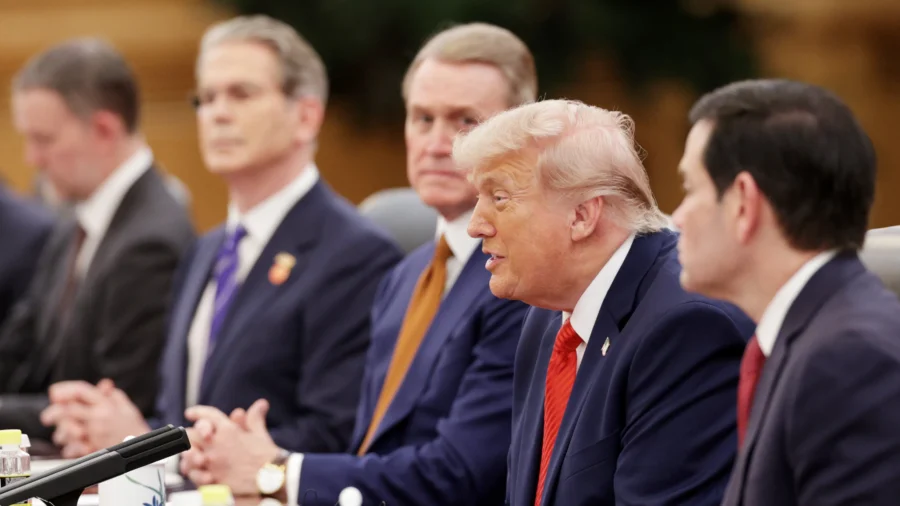
U.S. President Donald Trump has invited Chinese leader Xi Jinping to visit the White House on Sept. 24, following their summit in Beijing that lasted about two hours on May 14.
Trump announced the invitation at a state banquet in Beijing on Thursday evening. Earlier in the day, the two leaders held a closed-door meeting during which they discussed a range of issues, including economic cooperation, fentanyl, and Iran, according to a White House readout.
The readout did not include several other topics, such as Taiwan and China’s political prisoners, issues Trump had previously said he would raise before traveling to China.
The two leaders agreed that Iran must not develop nuclear weapons and that the Strait of Hormuz should remain open to global shipping.
The two leaders also discussed ways to expand economic ties, including greater market access for U.S. companies in China, increased Chinese investment in American industries, and expanded purchases of U.S. agricultural products, according to the White House readout.
In terms of fentanyl, the two leaders “highlighted the need to build on progress in ending the flow of fentanyl precursors into the United States,” the readout said.
On May 11, the U.S. Attorney’s Office in the Southern District of Florida announced charges against a Las Vegas man and a Chinese national over their alleged scheme to import synthetic opioids into the United States. The Chinese defendant was arrested by Chinese officials in China in April.
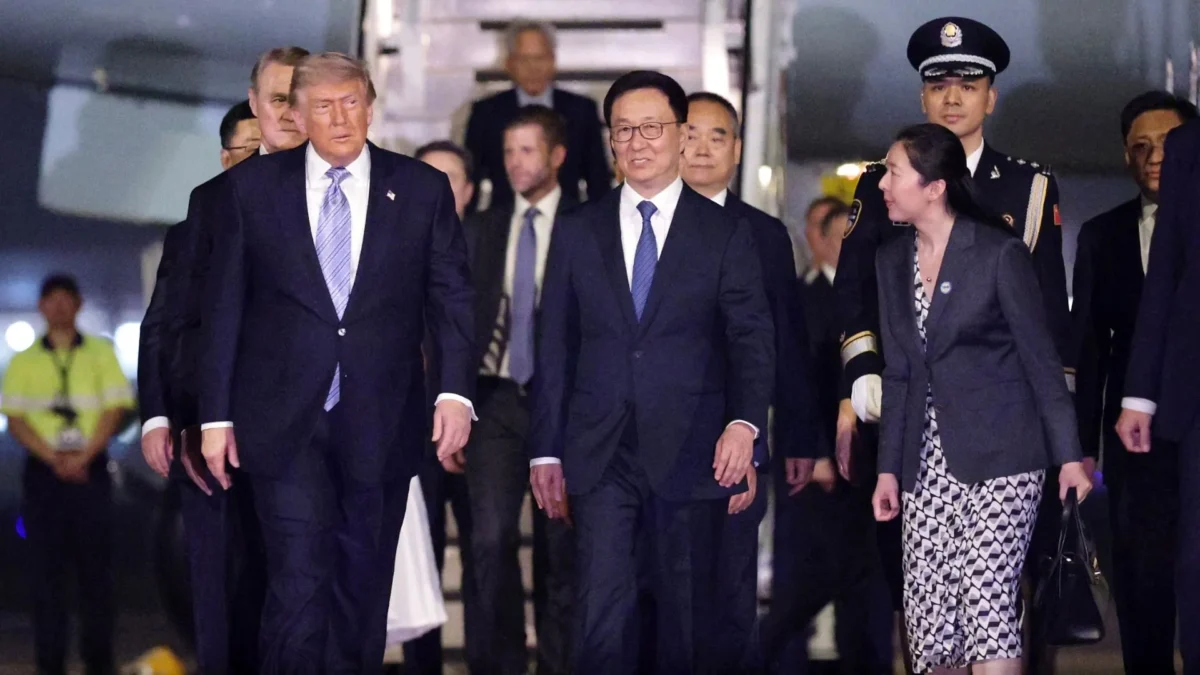
Vice President of China Han Zheng (C) escorts U.S. President Donald Trump (L) as he arrives at Beijing Capital International Airport in Beijing, China, on May 13, 2026. Alex Wong/Getty Images
According to the Chinese readout, Xi told Trump that China–U.S. relations would “enjoy overall stability” if the Taiwan issue was handled well. Otherwise, the two nations risked “clashes and even conflicts, putting the entire relationship in great jeopardy,” Xi said.
The readout from the Chinese Ministry of Foreign Affairs stated that the two leaders discussed the situation in the Middle East, the Ukraine crisis, the Korean Peninsula, and other major international and regional issues, without providing further details.
As for bilateral ties, Xi also used the opportunity to lay out his vision of stability.
“I have agreed with President Trump on a new vision of building a constructive China-U.S. relationship of strategic stability,” Xi said, according to China’s foreign ministry. “This will provide strategic guidance for China-U.S. relations over the next three years and beyond, and will be well received by the people of both countries and the international community.”
Xi urged both sides to further utilize communication channels in the diplomatic and military-to-military fields and expand cooperation in the economy, trade, health, agriculture, tourism, and law enforcement.
It is unclear whether Trump and Xi had discussed the Chinese regime’s political prisoners.
Before arriving in China, Trump said he would raise the cases of Hong Kong democracy activist Jimmy Lai and Chinese pastor Jin Mingri.
Taiwan
The Taiwan government quickly rebuked the Chinese leader’s remarks on the island.
Taiwan’s Ministry of Foreign Affairs, in a statement, pointed out that China continues to harass Taiwan by deploying aircraft and vessels to areas near the island.
“For a long time, China has continuously carried out various gray-zone intrusions and military threats in the East China Sea, South China Sea, Taiwan Strait, and areas surrounding Taiwan,” the ministry said. “China is the only current risk to regional peace and stability.”
Michelle Lee, a spokesperson for Taiwan’s premier, echoed the ministry’s comments during a daily briefing.
“I believe that China’s military threat is the only factor undermining security in the Taiwan Strait and the Indo-Pacific region,” Lee said. “The U.S. side has also repeatedly reaffirmed its clear position of steadfast support for Taiwan.”
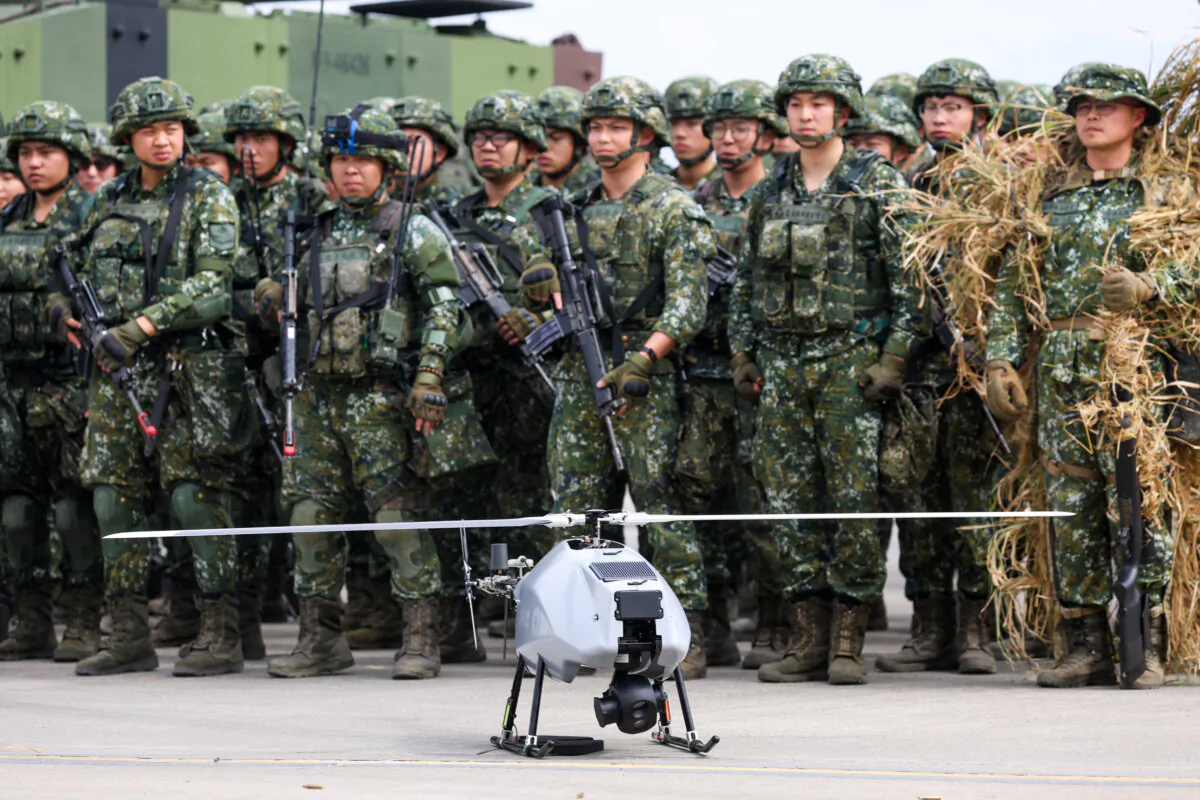
Soldiers stand next to a military unmanned aerial vehicle in Taichung, Taiwan, on Jan. 27, 2026. I-Hwa Cheng/AFP via Getty Images
China’s communist regime considers democratically governed Taiwan to be a Chinese province, even though it has never ruled the island. Beijing has demanded that countries adhere to its “one-China principle,” under which the Chinese regime claims sovereignty over Taiwan.
Many countries, including the United States, maintain a “one-China policy,” acknowledging that there is only one “China” without recognizing Beijing’s sovereignty over Taiwan.
For decades, Washington and Taipei have enjoyed a robust relationship despite a lack of formal diplomatic ties.
Under the Taiwan Relations Act, the United States has been Taiwan’s largest arms supplier for the island’s self-defense.
Mike Pompeo, former secretary of state during the first Trump administration, warned about Xi’s likely demands on Taiwan before the Trump–Xi meeting.
“Expect Xi to push for concessions on Taiwan,” Pompeo wrote in a May 13 post on X. “We need to be crystal clear that America will not budge when it comes to Taiwan’s sovereignty and independence.”
Four senior House Democrats on May 13 sent a letter to Trump urging him to uphold the longstanding U.S. policies toward Taiwan and oppose any Chinese attempt to “dictate U.S. policy toward Taiwan.”
The four House Democrats—including Rep. Ro Khanna (D-Calif.), ranking member of the House Select Committee on the Chinese Communist Party—also urged Trump to approve a delayed arms sale worth $14 billion to Taiwan.
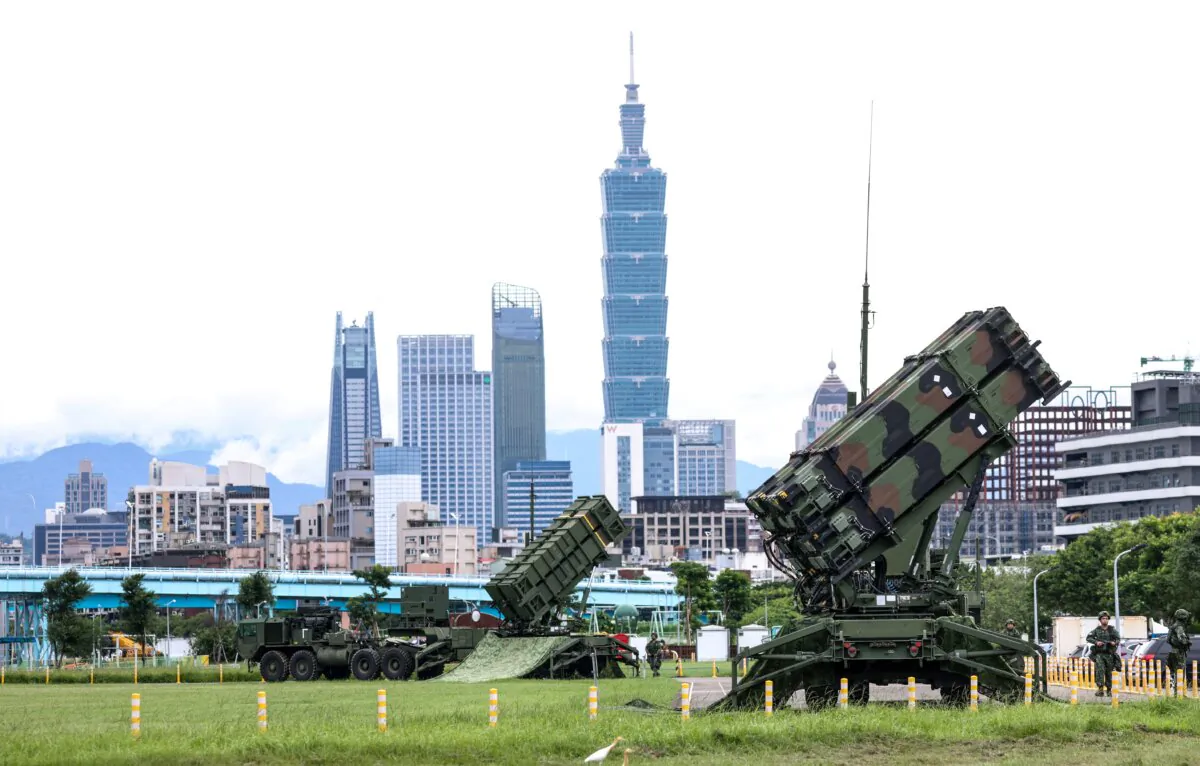
Air Force Patriot missile systems are deployed at a local park during Taiwan’s annual Han Kuang military exercise in Taipei on July 11, 2025. I-Hwa Cheng/AFP via Getty Images
On May 14, Guo Jiakun, a spokesperson for China’s foreign ministry, refused to say whether Xi and Trump had discussed U.S. arms sales to Taiwan during a daily briefing. Instead, Guo reiterated Beijing’s opposition to such sales.
Beijing has been rapidly advancing its military capabilities to prepare for a conflict to seize Taiwan.
“As the CCP escalates its coercive behavior, cyber-attacks, and gray zone aggression against Taiwan, Congress is sending a clear message that it opposes any effort to change Taiwan’s status and will continue to support Taiwan’s democratic future,” Rep. John Moolenaar (R-Mich.), chairman of the House Select Committee on the CCP, said in a statement accompanying the resolution.